


Overview
Many websites you use every day, like Luma or Facebook Marketplace, have no API, so your AI agent has no way to use your account. Today the only option is a vision model that clicks through screenshots like a person, which is slow, expensive and error-prone.
Skeleton Key gives your agent a proper way in. It has four parts:
The Generator. You log in once in a secure live browser. An AI agent then explores the website, notices the requests the site makes behind the scenes, and turns each one into a simple operation such as "list my events" or "get a profile". Automatic testing. Every operation is run for real against your account and rewritten until it works. Anything that can't be undone is never run automatically. OpenAPI documentation. Each website gets a published OpenAPI spec, downloadable code, and a ready-to-use MCP server, so any agent (Claude Code, Codex or your own) can connect in one line. It keeps learning. Every mistake the generator fixes becomes a lesson it reads before the next website, and all the lessons are public on the Skills page. Results: against the same model browsing with screenshots, Skeleton Key was 7x faster, 7x cheaper and more accurate (36/36 correct vs 31/36). You can watch this live on the Race page.
How we used Vultr: the whole app runs on Vultr. Three Vultr VMs in a private network run the website, the orchestrator and the sandboxes. Every AI call uses Vultr Serverless Inference (Qwen for vision, GLM for writing code). All the browsing and code testing happens in isolated containers that are deleted after each run, and the generated APIs and learned lessons are stored in Vultr Object Storage.
Try it as a guest at https://45-76-254-85.sslip.io: connect your own account and plug it into your agent.
Note: the demo URL is substituted with the GitHub repository link.
No comments yet
Be the first to comment on this project.


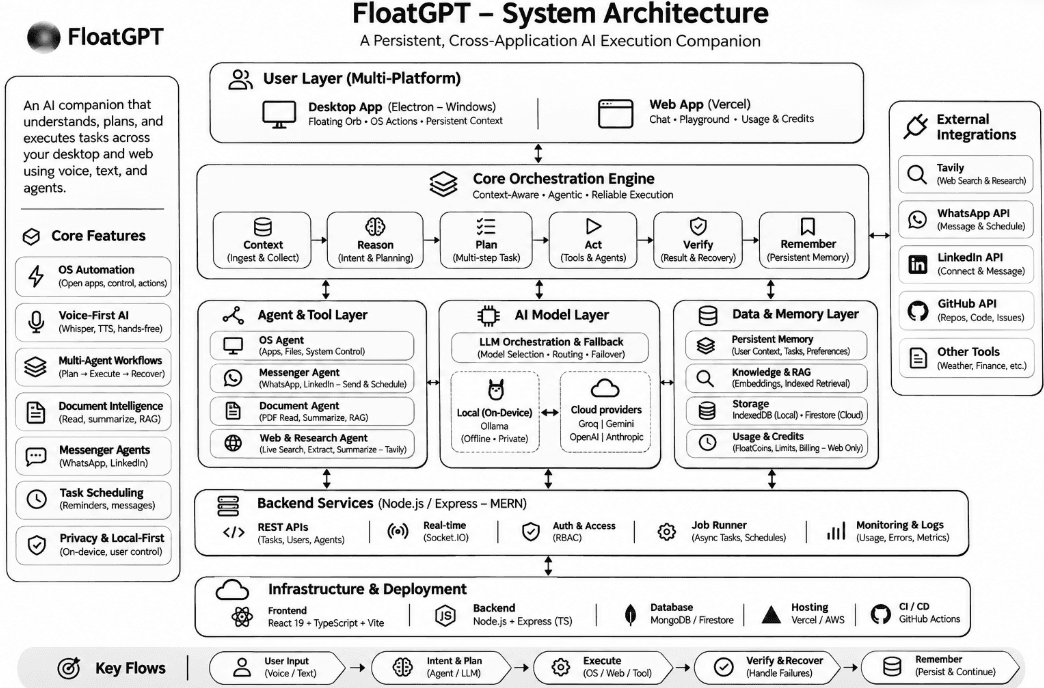

FloatGPT — Omnipresent, Local-First AI Desktop Companion
FloatGPT is an omnipresent desktop AI companion that floats over Windows to automate OS workflows, plan tasks, and generate real-time executive dossiers. Operating 100% privately on your PC or powered by the cloud, it transforms daily computing with screen awareness and calm execution.
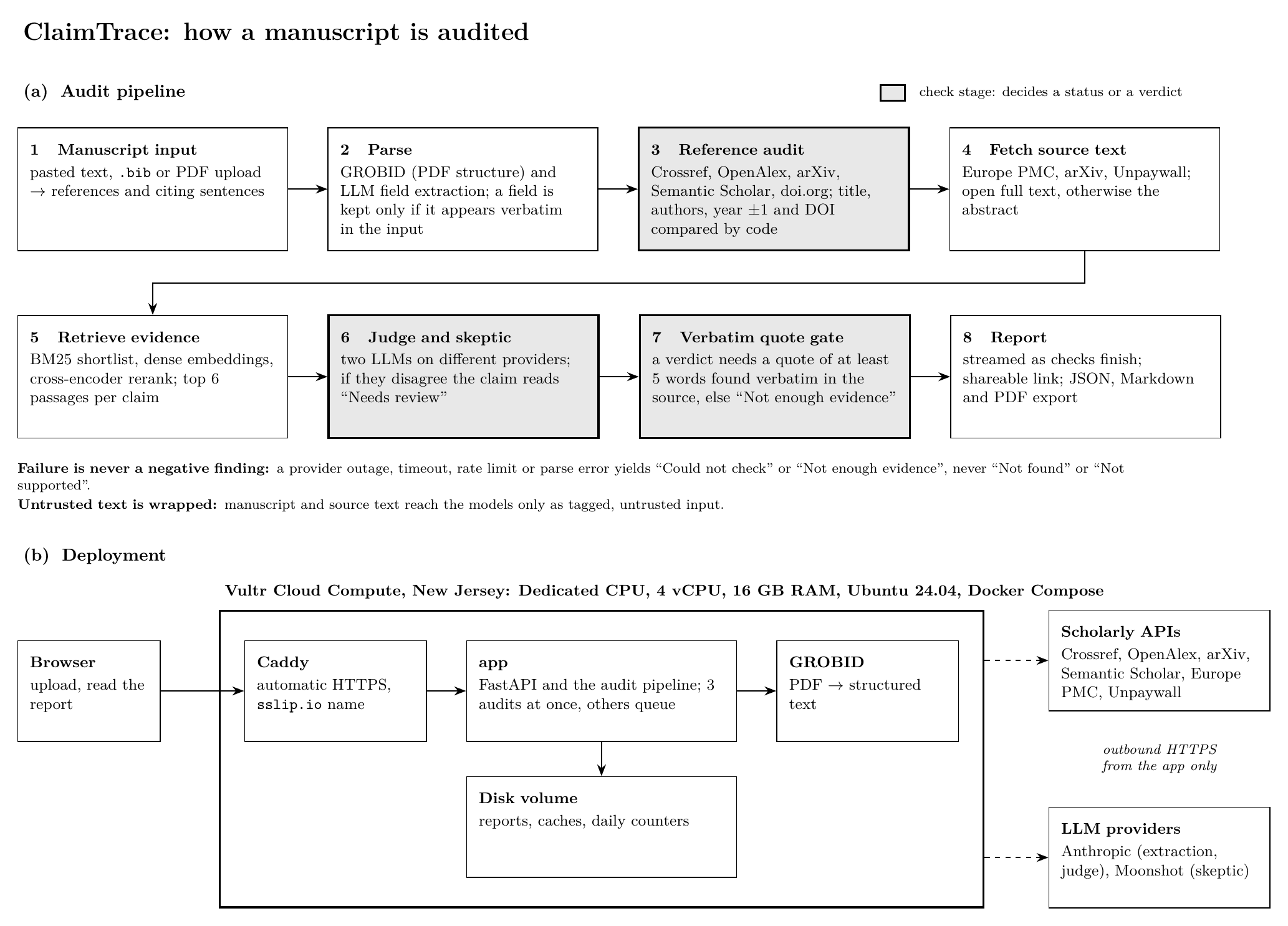
ClaimTrace
ClaimTrace audits the citations in a scientific manuscript: it checks that every reference exists and is described correctly, and that each cited source actually says what the citing sentence claims, with a verbatim quote as evidence. On 1,728 reference test cases it never marked a fabricated or altered reference as verified.
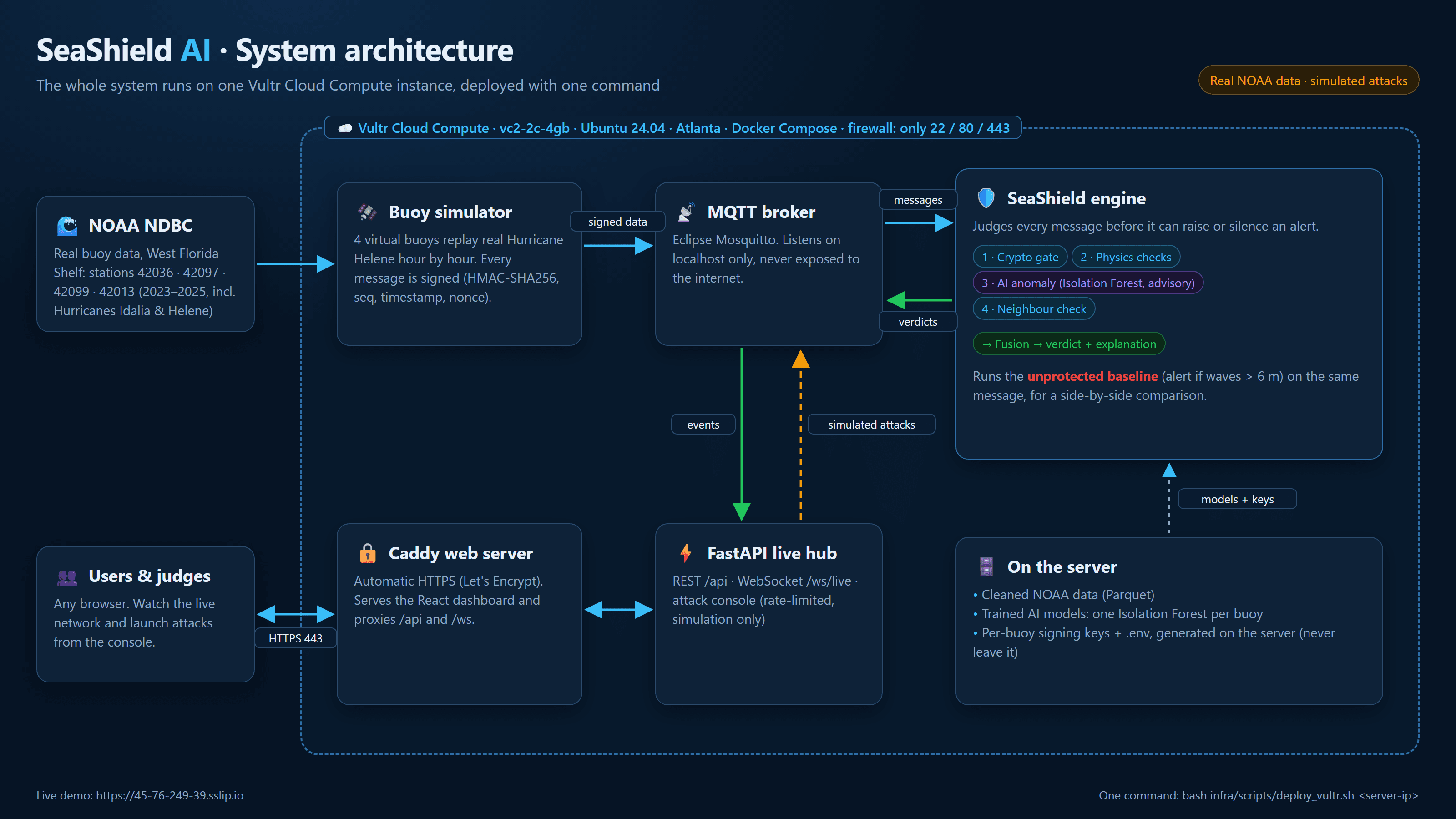
seashield ai
Ocean buoys feed disaster-warning centres, which trust what they receive. A hacked buoy can fake giant waves to trigger a false alarm, or hide a real storm. SeaShield AI checks every reading with four layers: cryptographic signatures, physics rules learned from real data, an AI anomaly model, and comparison with nearby buoys. Suspicious alerts are held for human review. Our live demo on Vultr replays real NOAA data from Hurricane Helene: launch attacks yourself and watch SeaShield stop them.