



Overview
ChatGPT learned by reading the internet. Robots can't: every robot skill today is recorded by hand, one task at a time, and the new robot models (VLAs) are starving for that data. Replay turns the open web into robot skills from one sentence.
How it works: an agent turns the prompt into a search plan. Scrapling scrapes inside a throwaway Vultr VM per robot (Creative Commons YouTube video and web pages, licences checked), a vision model checks each clip, and MediaPipe tracks the person's hand and body. The motion is retargeted onto the SO-101's joints and replayed on hundreds of new table layouts in MuJoCo, keeping only the tries that work (the same idea as NVIDIA's MimicGen). A small policy then learns by imitation with ACT-style action chunking; for rule-based tasks the moves are planned instead, and every move is rehearsed in physics. Nothing reaches the robot until it has worked in simulation.
Results (simulated SO-101 in MuJoCo): block in the bowl 19/20 unseen layouts (policy trained in 21 s on a CPU), block tower 18/20, a dumbbell curl copied 1:1 from Creative Commons video (elbow within 1.25 degrees), Tower of Hanoi in the optimal 7 moves, a six-cup pyramid, and Deep Blue vs. Kasparov 1997 Game 6 played on both sides (37 moves, worst placement 4.9 mm). Every skill can be downloaded. Next: a real SO-101 hardware test and fine-tuning SmolVLA on Replay's data.
Note: the demo URL is substituted with the GitHub repository link.
No comments yet
Be the first to comment on this project.
FloatGPT — Omnipresent, Local-First AI Desktop Companion
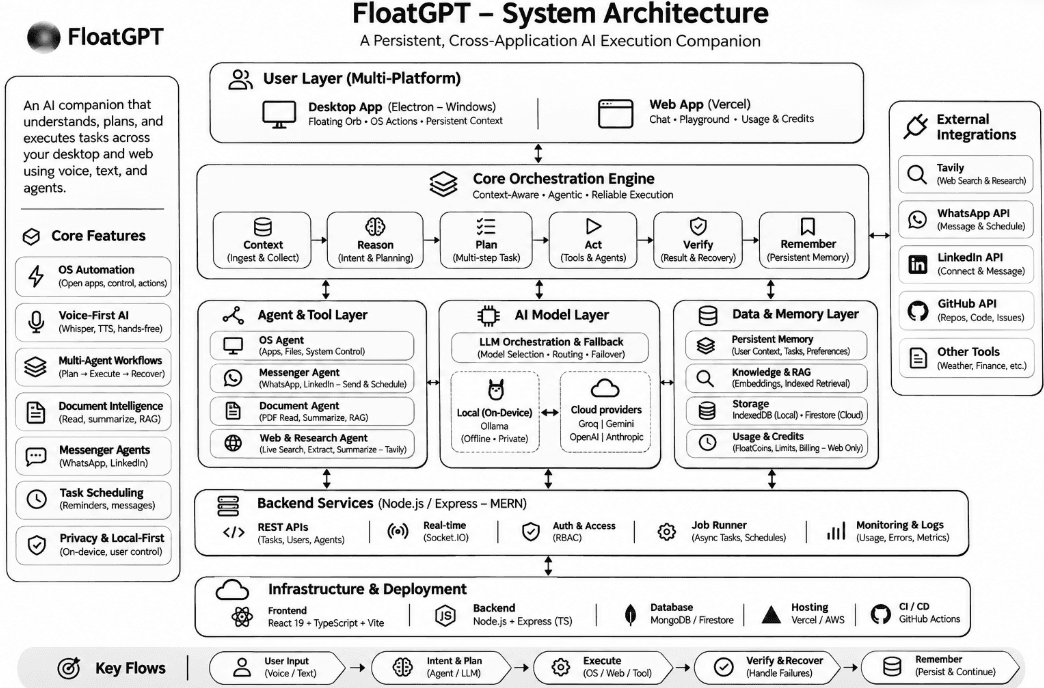
FloatGPT is an omnipresent desktop AI companion that floats over Windows to automate OS workflows, plan tasks, and generate real-time executive dossiers. Operating 100% privately on your PC or powered by the cloud, it transforms daily computing with screen awareness and calm execution.
ClaimTrace
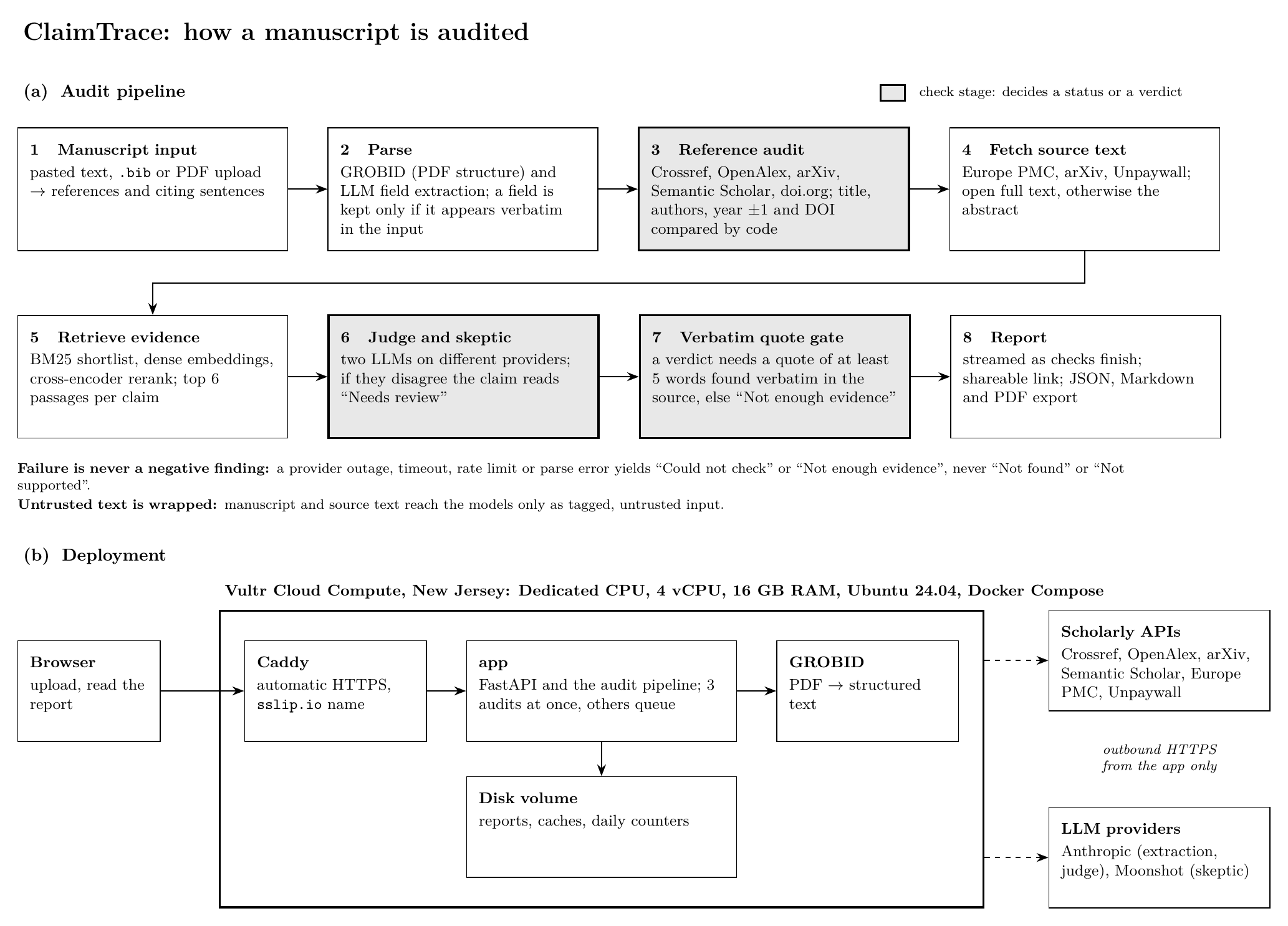
ClaimTrace audits the citations in a scientific manuscript: it checks that every reference exists and is described correctly, and that each cited source actually says what the citing sentence claims, with a verbatim quote as evidence. On 1,728 reference test cases it never marked a fabricated or altered reference as verified.



seashield ai
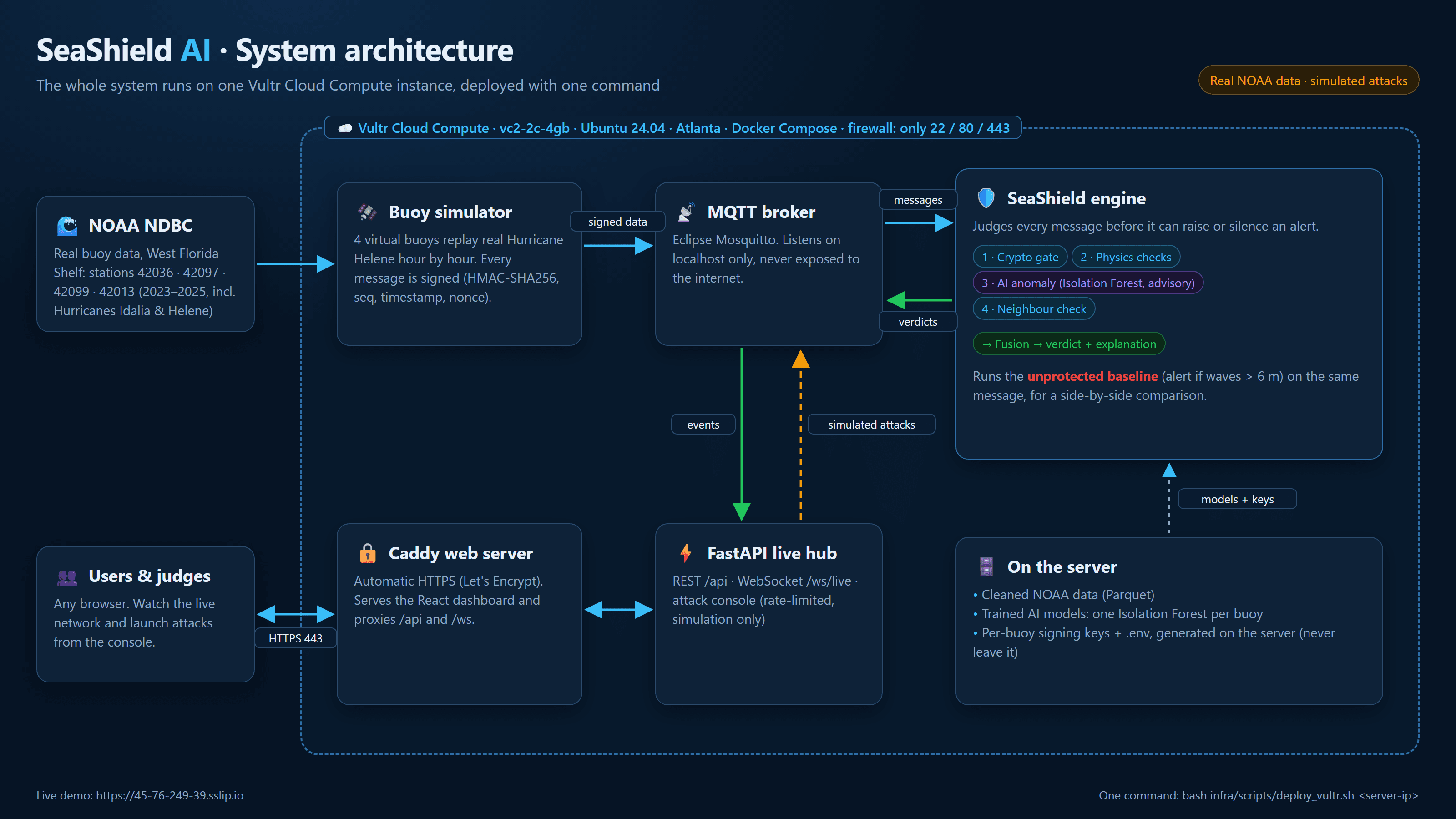
Ocean buoys feed disaster-warning centres, which trust what they receive. A hacked buoy can fake giant waves to trigger a false alarm, or hide a real storm. SeaShield AI checks every reading with four layers: cryptographic signatures, physics rules learned from real data, an AI anomaly model, and comparison with nearby buoys. Suspicious alerts are held for human review. Our live demo on Vultr replays real NOAA data from Hurricane Helene: launch attacks yourself and watch SeaShield stop them.