



Overview
AI models on CPUs are held back by generic kernels. Nusa is an agent that writes faster ones for your exact hardware, and it's safe to leave running on its own.
Pick a model from Hugging Face (for example AMD's own int4 models), an engine (vLLM + AMD ZenDNN, or llama.cpp) and a Vultr VX1 (AMD EPYC Turin), then say what you want. The agent runs on Vultr Serverless Inference. It measures the baseline, finds the slowest kernel, and writes a new one in C. Every attempt compiles and runs in its own throwaway Microsandbox microVM: no network, no keys, unprivileged, with memory and time caps. A judge with a hidden reference rejects wrong answers. Faster, correct kernels are kept as git commits.
Measured end to end, stock vs agent, served in microVMs: - AMD Llama-3.1-8B w4a16 (vLLM + ZenDNN): 5.79 → 11.52 tok/s (1.99×) - Qwen3-4B w4a16: 10.03 → 19.20 tok/s (1.91×) - AMD Phi-4-mini w4a16: 10.06 → 17.42 tok/s (1.73×) - Bonsai 8B / 27B 1-bit (llama.cpp): 1.70× / 1.61×
The agent rewrote the int4 matrix kernel that AMD's ZenDNN stack calls (built from source: vLLM, zentorch, ZenDNN, AOCL-DLP): it unpacks 4-bit weights in registers and uses AVX-512 bf16 dot products.
Containment first: a red-team mode fires rm -rf /, a fork bomb, an infinite loop, a memory bomb, API-key theft and phone-home through the same microVM path. All six are contained, and the host checks this from outside the sandbox. The app is served through NetBird with no open ports and a password gate, and each run gets a public link that expires when the run ends.
Note: the demo URL is substituted with the GitHub repository link.
Tech stack
No comments yet
Be the first to comment on this project.



FloatGPT — Omnipresent, Local-First AI Desktop Companion
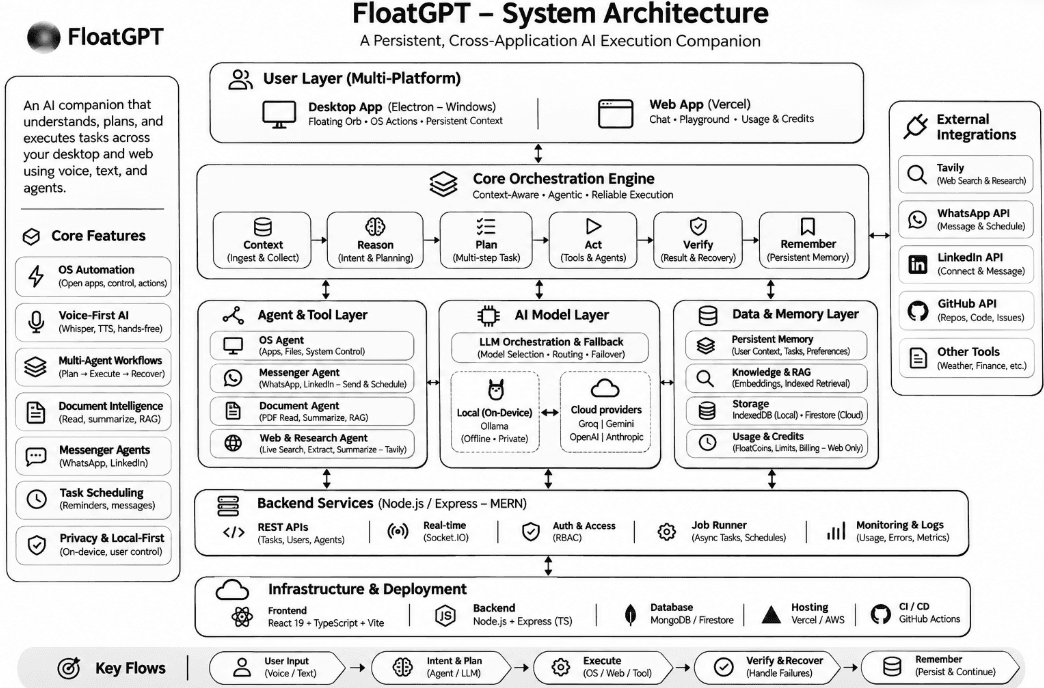
FloatGPT is an omnipresent desktop AI companion that floats over Windows to automate OS workflows, plan tasks, and generate real-time executive dossiers. Operating 100% privately on your PC or powered by the cloud, it transforms daily computing with screen awareness and calm execution.
ClaimTrace
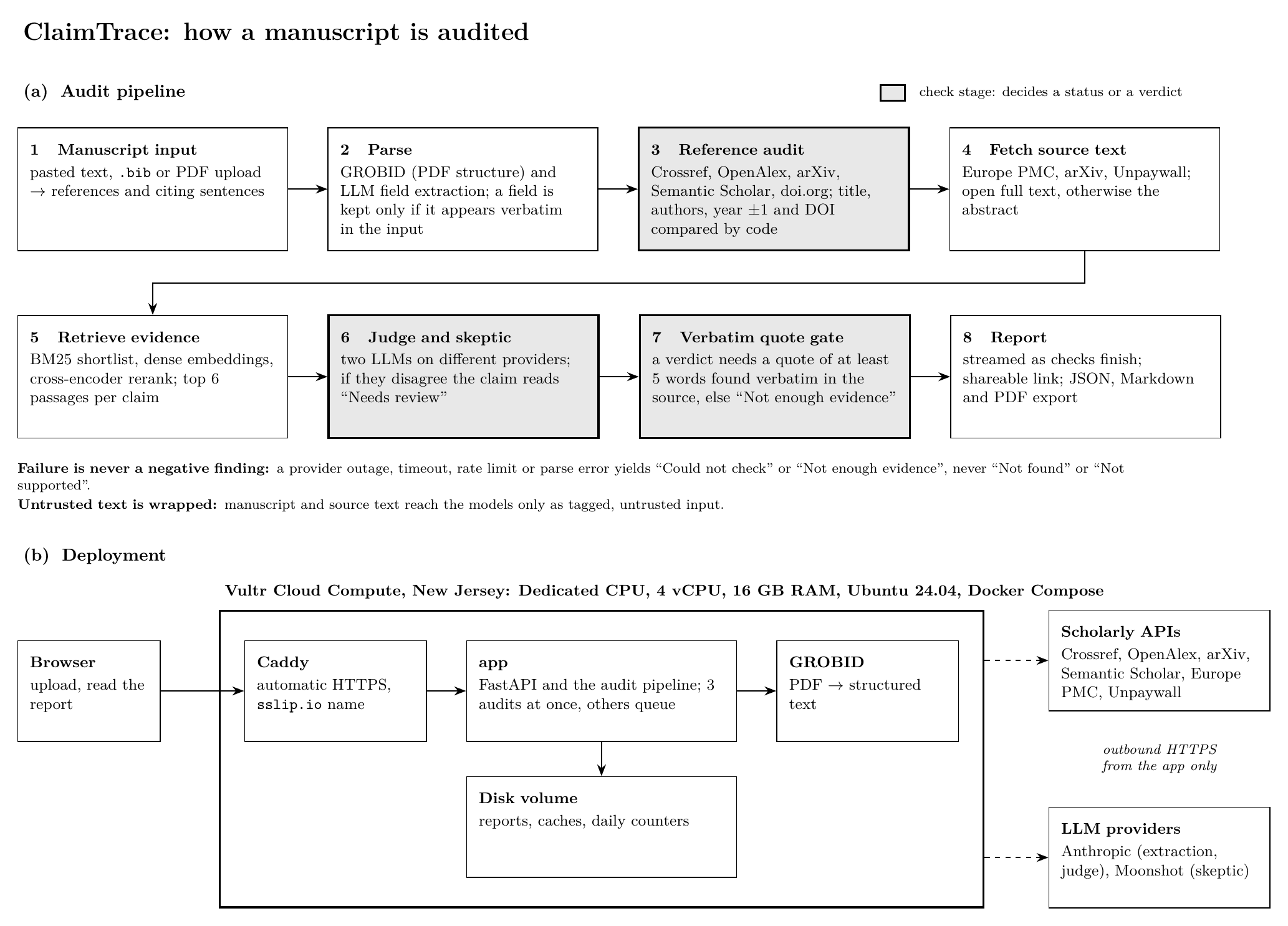
ClaimTrace audits the citations in a scientific manuscript: it checks that every reference exists and is described correctly, and that each cited source actually says what the citing sentence claims, with a verbatim quote as evidence. On 1,728 reference test cases it never marked a fabricated or altered reference as verified.
seashield ai
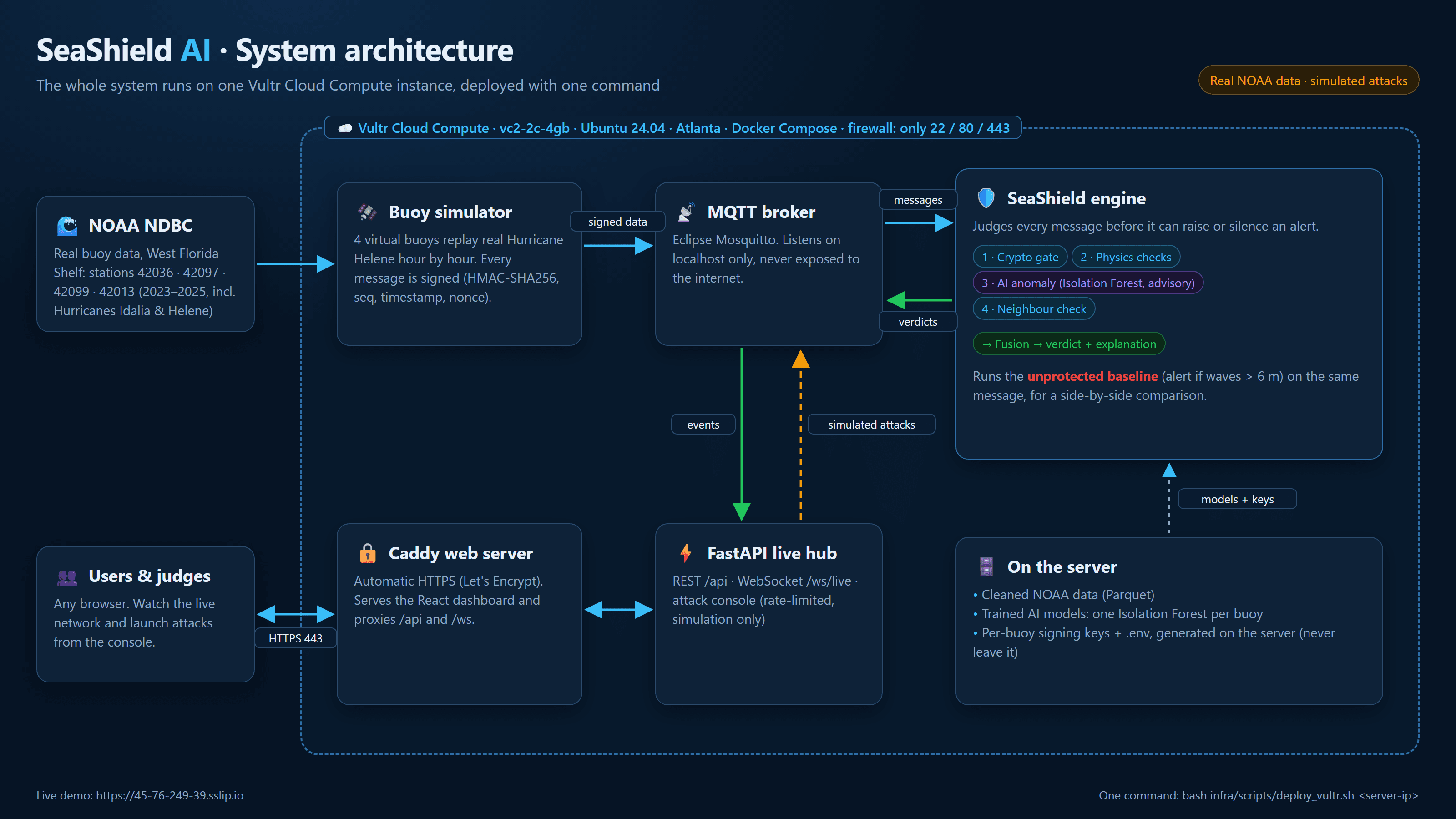
Ocean buoys feed disaster-warning centres, which trust what they receive. A hacked buoy can fake giant waves to trigger a false alarm, or hide a real storm. SeaShield AI checks every reading with four layers: cryptographic signatures, physics rules learned from real data, an AI anomaly model, and comparison with nearby buoys. Suspicious alerts are held for human review. Our live demo on Vultr replays real NOAA data from Hurricane Helene: launch attacks yourself and watch SeaShield stop them.