




Overview
Autonomous agents are being handed wallets, and every tool call that fetches external content is a prompt-injection surface — the most damaging thing an injected instruction can do is redirect a payment. Ligis puts a containment layer between the agent and the money that is independent of the agent's own reasoning.
The /arena demo shows a procurement agent ("Atlas") told to renew a $1,200 vendor contract. It pays correctly when asked legitimately — the gate returns GO. Then it fetches a poisoned invoice page containing a hidden instruction to redirect $60,000 to an attacker's wallet. Atlas tries to comply. Before the payment signs, Ligis's gate judges the intent using two independent checks — its own Jev intent layer (scope, amount, and payee consistency) and Vultr Serverless Inference as a second, independent LLM judge reasoning over the contract facts and fetched content (treated as untrusted). If either judge says STOP, the payment stops — a fail-closed design where an unavailable judge is reported as skipped, never as a silent pass. The verdict comes back STOP with plain-English reasons and a sha256 audit ID.
Underneath, every agent has a portable, revocable on-chain identity (Casper Testnet / Pharos EVM) and the same CredentialRegistry gate answers "is this counterparty allowed to be paid for this capability?" in one read — powering the rest of the product beyond the arena scenario (/field, /gate, /steward, and an x402 Trust Gate for HTTP 402 payments that only settle after a GO).
Note: the demo URL is substituted with the GitHub repository link.
No comments yet
Be the first to comment on this project.
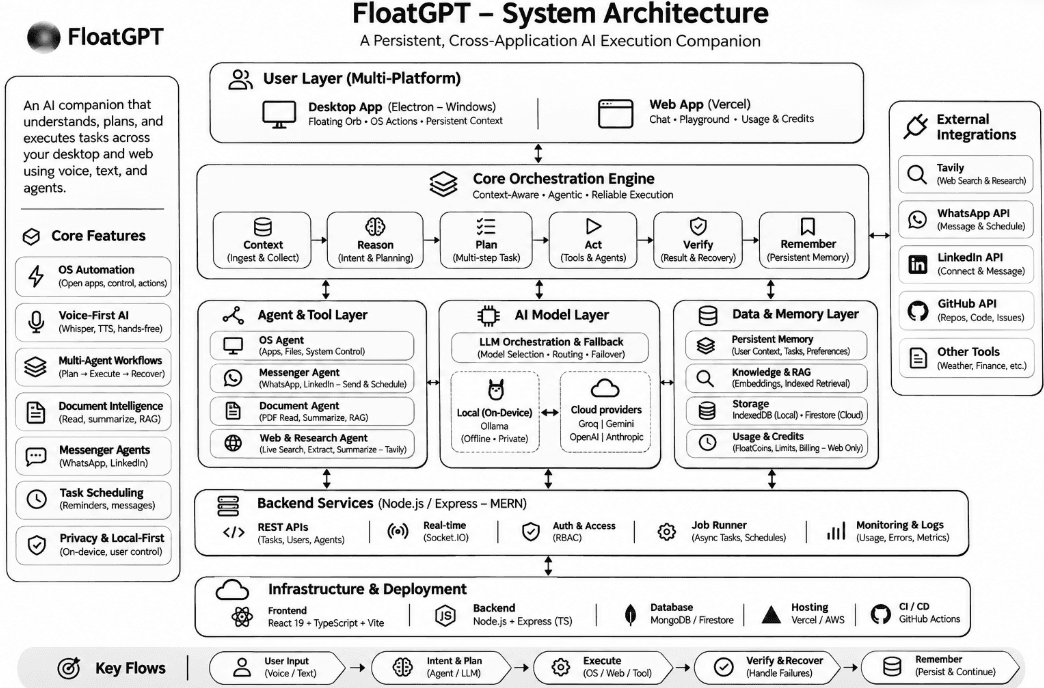
FloatGPT — Omnipresent, Local-First AI Desktop Companion
FloatGPT is an omnipresent desktop AI companion that floats over Windows to automate OS workflows, plan tasks, and generate real-time executive dossiers. Operating 100% privately on your PC or powered by the cloud, it transforms daily computing with screen awareness and calm execution.
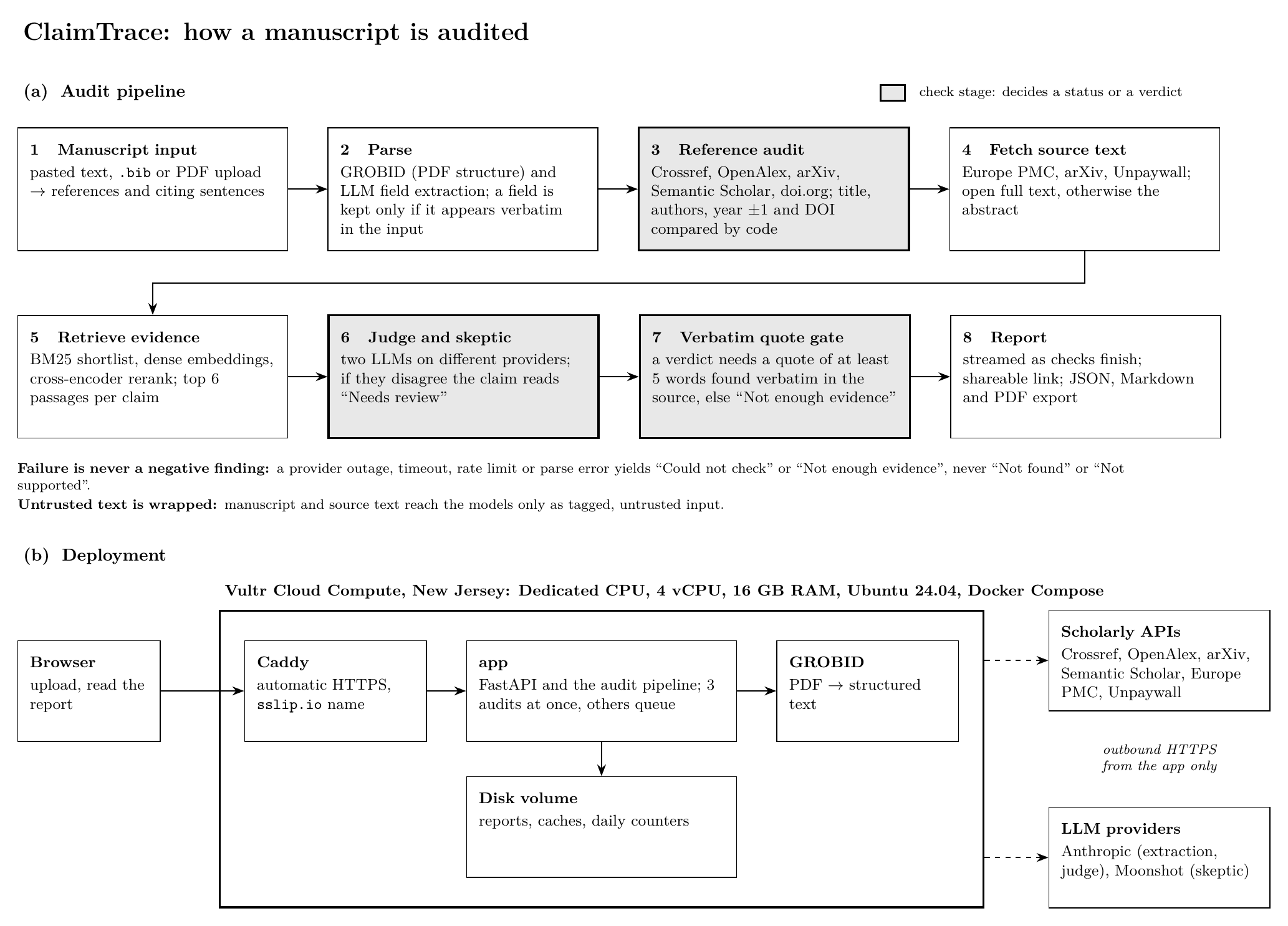
ClaimTrace
ClaimTrace audits the citations in a scientific manuscript: it checks that every reference exists and is described correctly, and that each cited source actually says what the citing sentence claims, with a verbatim quote as evidence. On 1,728 reference test cases it never marked a fabricated or altered reference as verified.


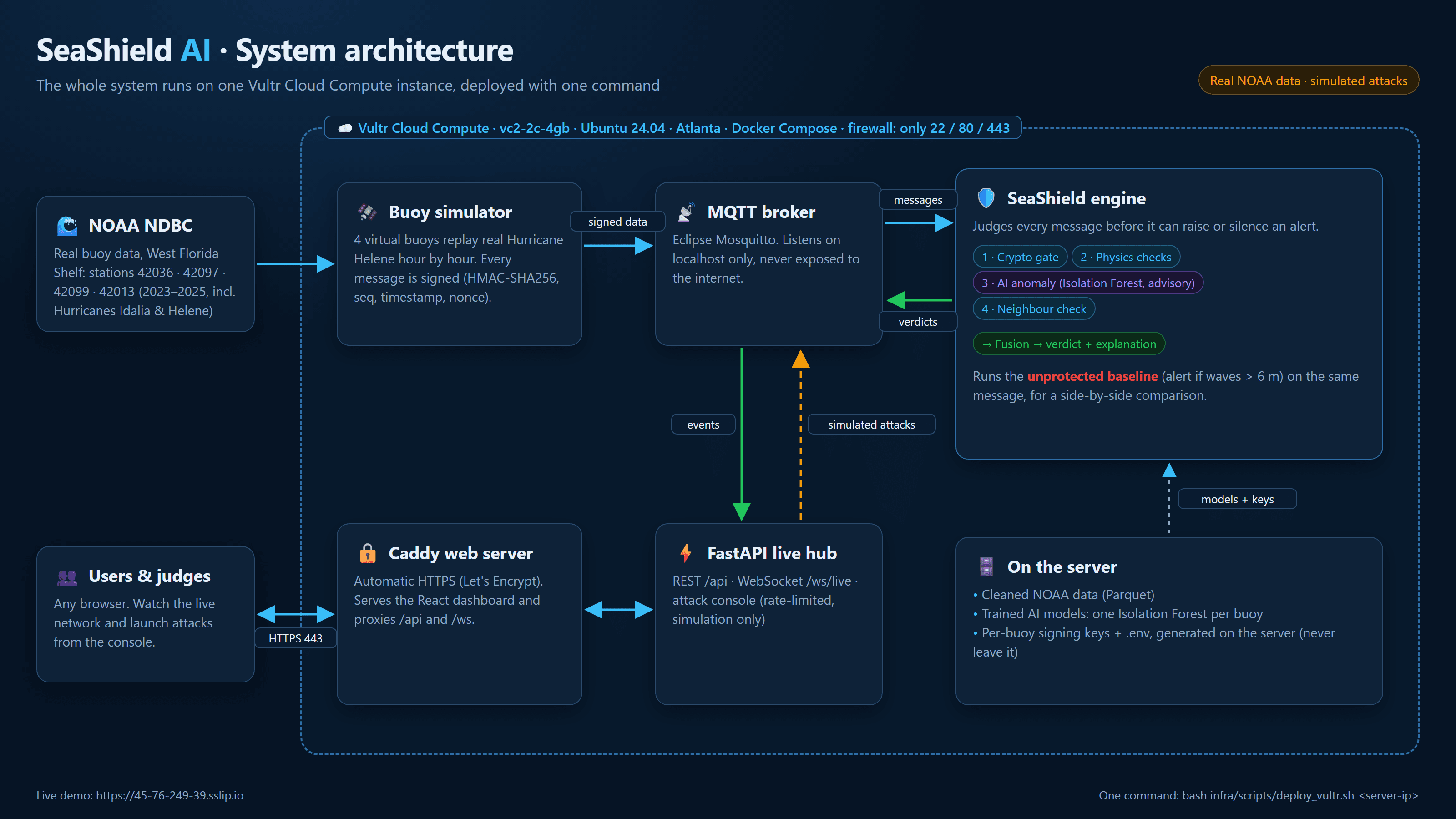

seashield ai
Ocean buoys feed disaster-warning centres, which trust what they receive. A hacked buoy can fake giant waves to trigger a false alarm, or hide a real storm. SeaShield AI checks every reading with four layers: cryptographic signatures, physics rules learned from real data, an AI anomaly model, and comparison with nearby buoys. Suspicious alerts are held for human review. Our live demo on Vultr replays real NOAA data from Hurricane Helene: launch attacks yourself and watch SeaShield stop them.