TravelMate.AI – Project Overview
TravelMate.AI is an AI-powered travel discovery and planning platform designed to make travelling easier, smarter, and more convenient. It helps users explore tourist destinations around the world, discover travel options, compare available information, and create personalized travel plans from one platform.
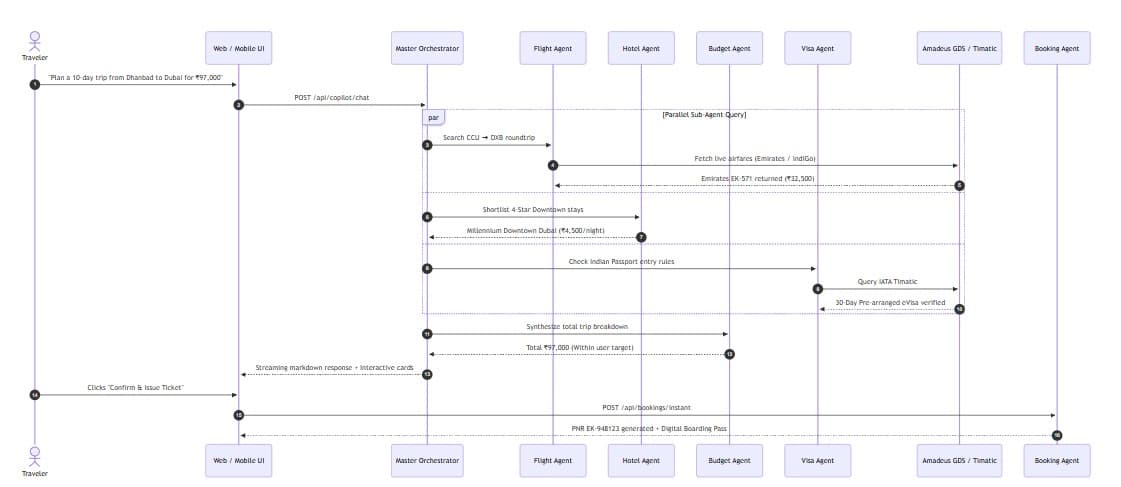
The platform combines an interactive global tourism explorer with an AI travel assistant. Users can discover destinations, explore attractions, plan itineraries, estimate travel budgets, and find relevant flight and hotel options. The AI assistant is designed to understand natural-language travel requests and provide recommendations based on user preferences, budget, and travel goals.
Key Highlights:
- 🌍 Global tourist destination discovery and interactive map exploration.
- 🤖 AI-powered travel assistant and personalized recommendations.
- ✈️ Flight and hotel search architecture, with Trip.com and MakeMyTrip integration planned.
- 🗺️ Travel itinerary and trip planning.
- 💰 Budget estimation and travel comparisons.
- 📱 Responsive web experience and mobile application direction.
Technology Stack: React 19, TypeScript, Vite, Tailwind CSS, Python FastAPI, AI agent architecture, React Native with Expo, and Docker.
Vision: To build an intelligent, unified travel platform that helps people discover the world, plan trips confidently, and make better travel decisions.
Tagline: Explore the World. Plan Smarter. Travel Better. 🌍