



Overview
Shared electricity bills create constant friction in student housing because no one has clear proof of actual usage. SplitWatt lets roommates describe their habits in everyday language, then uses AI to estimate consumption and produce a transparent, proportional split of the total bill. A second mode helps anyone who suspects prepaid units disappeared too quickly by comparing their own estimated use against the amount loaded and returning a clear verdict.
How it uses Vultr
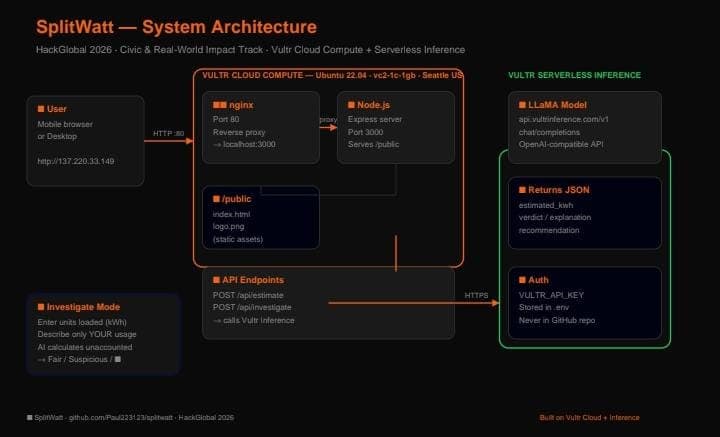
How Vultr was used in SplitWatt SplitWatt runs entirely on Vultr. The backend lives on a Vultr Cloud Compute instance (Ubuntu 22.04, plan vc2-1c-1gb in Seattle). Nginx on that instance reverse-proxies port 80 to a Node.js + Express server that serves the single-page frontend and handles the two API routes. The AI layer uses Vultr Serverless Inference with a LLaMA model. Every time a user describes their electricity usage, the Node.js server sends the description to Vultr’s OpenAI-compatible endpoint (https://api.vultrinference.com/v1). The model returns an estimated kWh figure (and a short breakdown) for Split Mode, or a full investigation verdict for Investigate Mode. The inference API key is stored only in a .env file on the server and is never exposed to the browser. Why Vultr We chose Vultr because it let us go from zero to a live, AI-powered product in one place. Cloud Compute gave us a cheap, ready Ubuntu server we could SSH into and deploy with nginx and pm2 in minutes. Serverless Inference gave us a working LLM without provisioning GPUs, managing model weights, or writing custom inference code — we just pointed our existing Node.js fetch calls at their OpenAI-compatible API. The $200 HackGlobal credits covered both the Compute instance and all inference usage for the entire weekend, so we could focus on the product instead of infrastructure costs or credit limits. The combination also kept the architecture simple: one server for the app, one managed inference endpoint for the AI, and a clean separation so the frontend never sees secrets.
Tech stack
No comments yet
Be the first to comment on this project.
FloatGPT — Omnipresent, Local-First AI Desktop Companion
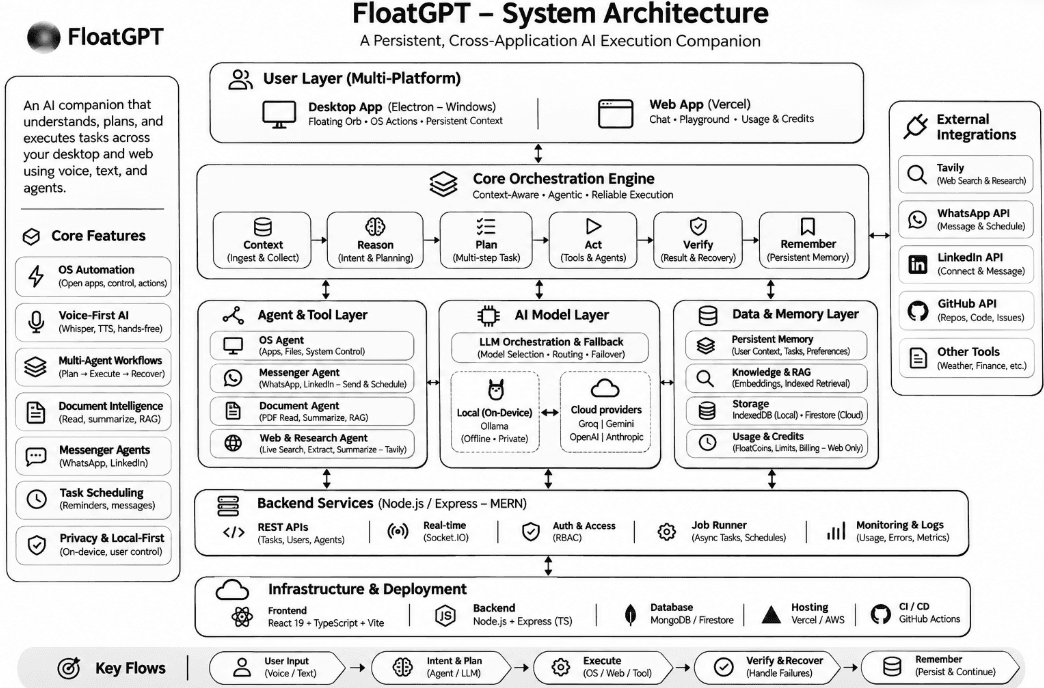
FloatGPT is an omnipresent desktop AI companion that floats over Windows to automate OS workflows, plan tasks, and generate real-time executive dossiers. Operating 100% privately on your PC or powered by the cloud, it transforms daily computing with screen awareness and calm execution.
ClaimTrace
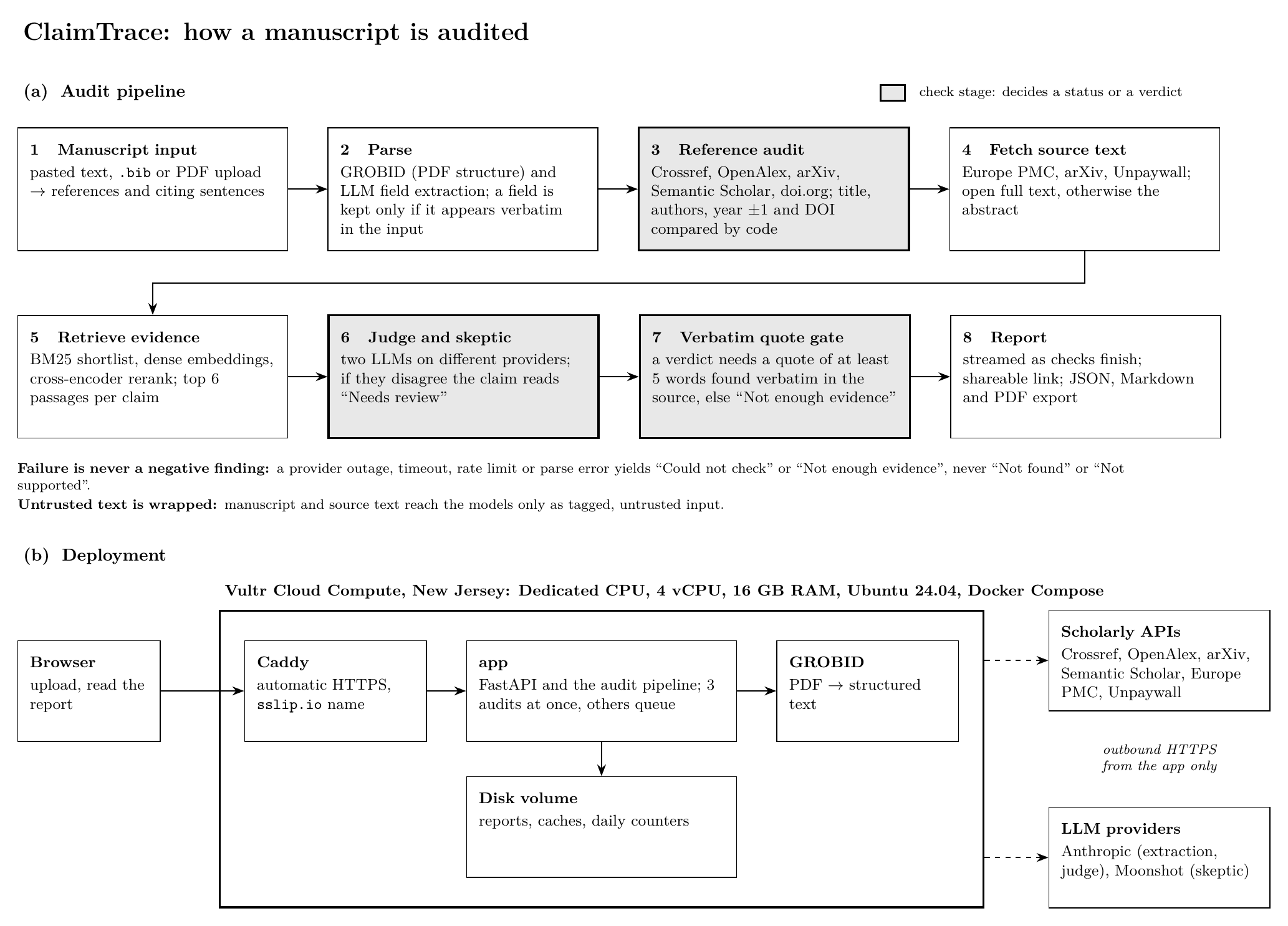
ClaimTrace audits the citations in a scientific manuscript: it checks that every reference exists and is described correctly, and that each cited source actually says what the citing sentence claims, with a verbatim quote as evidence. On 1,728 reference test cases it never marked a fabricated or altered reference as verified.
SeeHere: audio descriptions for lecture videos, grounded in visual evidence
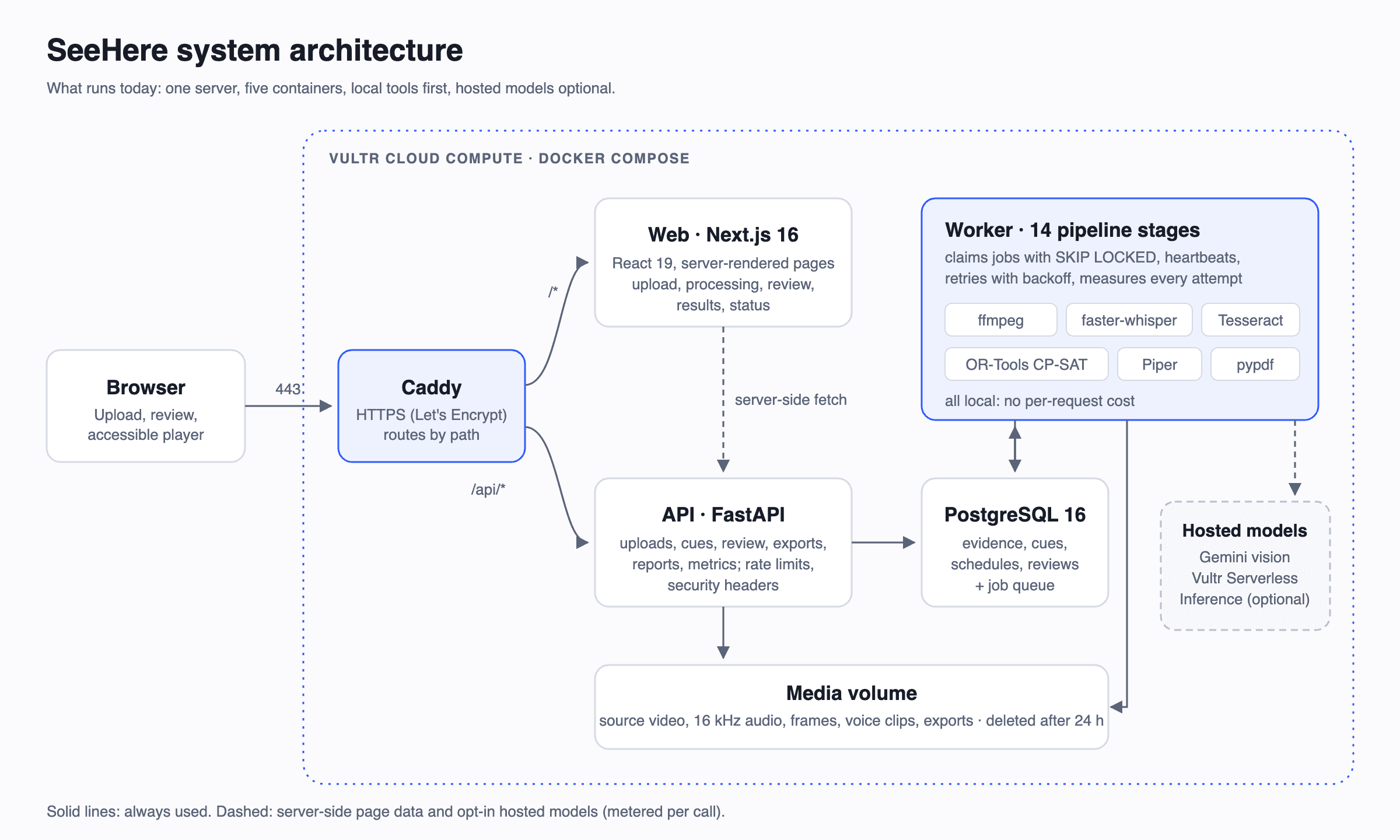
When a lecturer says “look at this chart”, blind and low-vision students hear nothing. SeeHere watches a recorded lecture, finds what is on screen but never said aloud, and writes short audio descriptions that a CP-SAT solver fits into natural pauses. Every line is linked to its evidence (keyframe, OCR, transcript) and checked, and uncertain claims are held for an instructor. Live on Vultr Cloud Compute with Vultr Serverless Inference.