


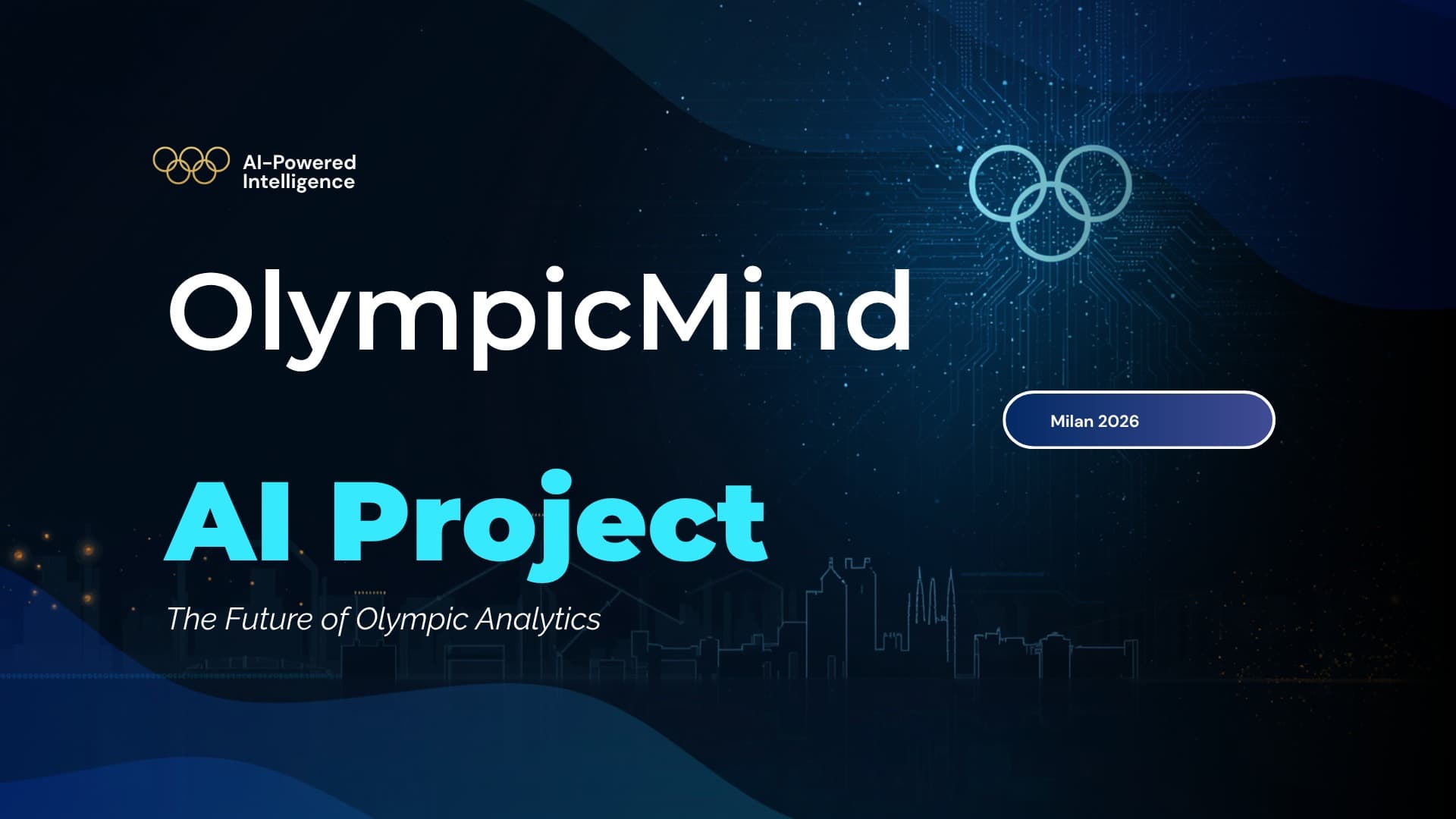

Overview
OlympicMind is an autonomous AI agent built to solve real-time navigation and crowd management challenges during the Milan 2026 Winter Olympics.
During major sporting events, millions of visitors face dangerous crowd surges, road closures, and venue confusion: traditional GPS apps don't account for event schedules or live crowd density. OlympicMind bridges that gap.
The system monitors 14 Olympic venues across Milan, Cortina, Bormio, and Livigno using TomTom Traffic Flow API, calculates a 0-100 Risk Score per venue by combining live crowd data with the Olympic event schedule, and delivers intelligent route recommendations through a conversational Gemini 2.5 Flash AI agent.
Key Features: - AI Chat Agent powered by Gemini 2.5 Flash with full crowd + schedule context - Real-time crowd monitoring at 14 Olympic venues via TomTom Traffic API - Smart route planning with BLOCKED/CONGESTED detection - Risk Score system combining live traffic + event schedule urgency - Automatic WhatsApp alerts via N8N webhook for critical incidents - React dashboard with live map, chat interface, and route planner - Fully deployed on Vultr VPS
Tech Stack: Python, FastAPI, Google Gemini 2.5 Flash, TomTom APIs, React, N8N, Vultr
Note: the demo URL is substituted with the GitHub repository link.
Tech stack
No comments yet
Be the first to comment on this project.



sentinel
Full-Stack Self-Healing DevOps & Security Copilot The Concept: An AI operations engineer that doesn't just suggest code fixes—it monitors cloud infra, detects uptime/security drops, automatically provisions fixes, and generates audit reports for enterprise compliance.
Agency Compiler
Agentic creative project compiler. Most creatives, agencies and designers dont know how to use ai, none the less agents. We created a platform that allows a creative agency or studio owner to instantly spin up agents based on the project ask, resources and scale.
ProofRun
ProofRun helps developers answer a critical question before shipping: will this update break behavior users rely on? An AI agent inspects two Git revisions, designs targeted experiments, and proposes repairs. An independent Docker-based verifier runs those experiments against both versions, preserves the original tests, and checks whether the repair actually works. Developers receive an update, skip, or postpone recommendation with recorded evidence and a reviewable patch. In a live synthetic…