



Overview
## Overview
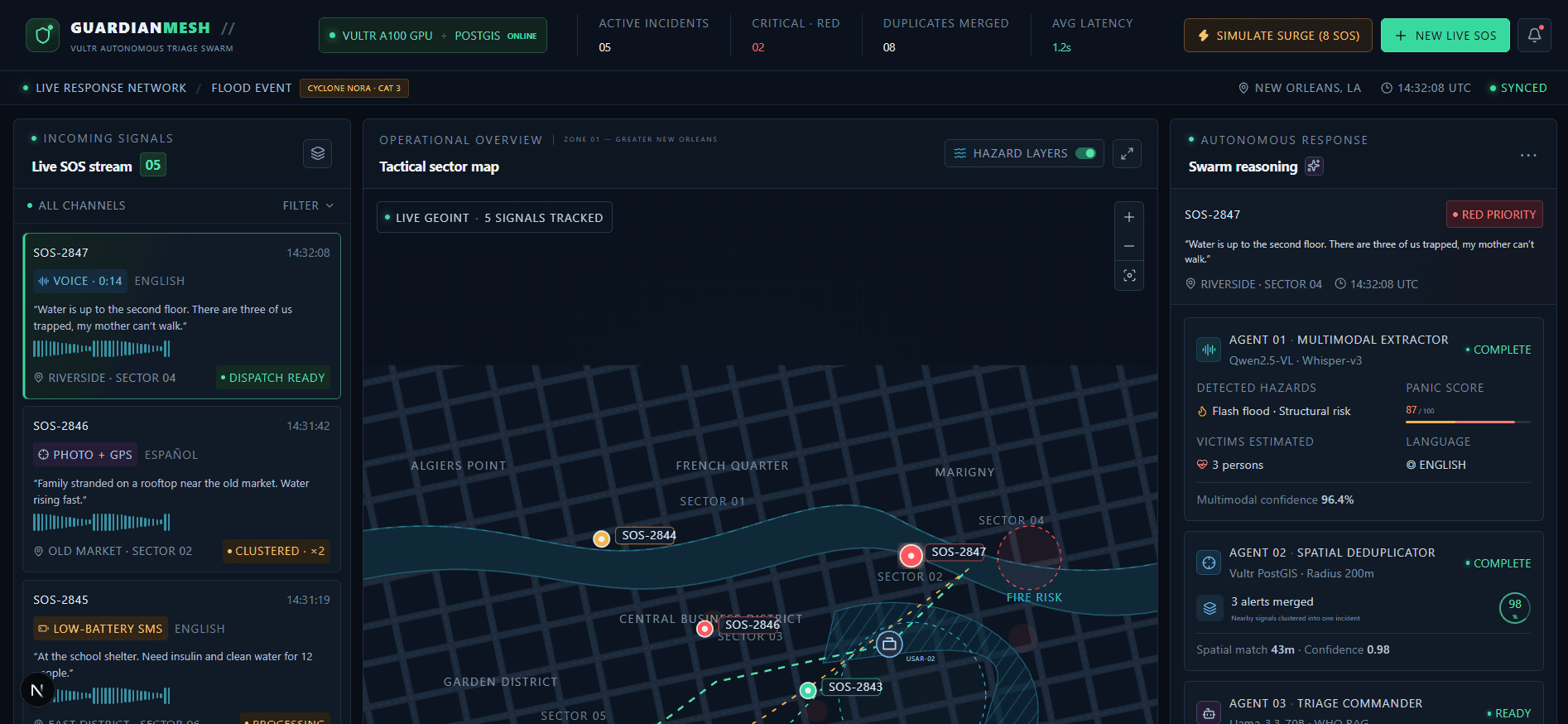
When a major disaster strikes, emergency call centers collapse within minutes under thousands of fragmented voice notes, blurry photos, and panic-driven SOS texts. GuardianMesh is an autonomous, multi-agent disaster response command center designed to eliminate emergency triage bottlenecks and coordinate tactical rescue operations in real time.
## Key Features
* Multimodal Intake & Processing: Automatically ingests raw citizen reports across voice notes, geolocated photos, and low-battery SMS feeds, detecting language, panic levels, and environmental hazards. * Spatial Deduplication & Clustering: Runs spatial radius checks to aggregate dozens of overlapping reports of the same incident into a single verified cluster with high confidence scores. * Autonomous Triage & Dispatch Commander: Leverages official START triage protocols and RAG-backed medical guidelines to classify severity, calculate optimal rescue unit routes, and auto-draft actionable victim responses with a one-click approval workflow.
## Powered by Vultr
Designed for privacy-first, sovereign government and emergency deployment, GuardianMesh relies on high-performance infrastructure: * Vultr Cloud GPUs (A100): Hosts open-weights models (Whisper-large-v3, Qwen2.5-VL, Llama-3.3-70B) for zero-leak local inference. * Vultr Managed PostgreSQL & PostGIS: Powers sub-second spatial querying, deduplication, and secure incident logging.
How it uses Vultr
GuardianMesh leverages Vultr’s high-performance cloud and bare-metal infrastructure to ensure sovereign, zero-latency emergency data processing: 1. **Vultr Cloud GPUs (NVIDIA A100 / L40S):** Powers our multi-agent inference pipeline. We host open-weights multimodal models—specifically Whisper-large-v3 for low-latency audio transcription and Qwen2.5-VL for emergency damage vision analysis—running entirely on Vultr GPU nodes to protect sensitive citizen location and medical data from leaking to third-party commercial APIs. 2. **Vultr Cloud Compute & Managed PostgreSQL (with PostGIS):** Acts as the central spatial dispatch engine. Incoming geolocated SOS signals are ingested and processed using PostGIS spatial indexing on Vultr instances, executing sub-second radius checks to cluster duplicate reports and map live rescue routes. 3. **Vultr Object Storage:** Securely archives immutable audio recordings, verification images, and audit logs required by emergency response teams.
Tech stack
No comments yet
Be the first to comment on this project.
FloatGPT — Omnipresent, Local-First AI Desktop Companion
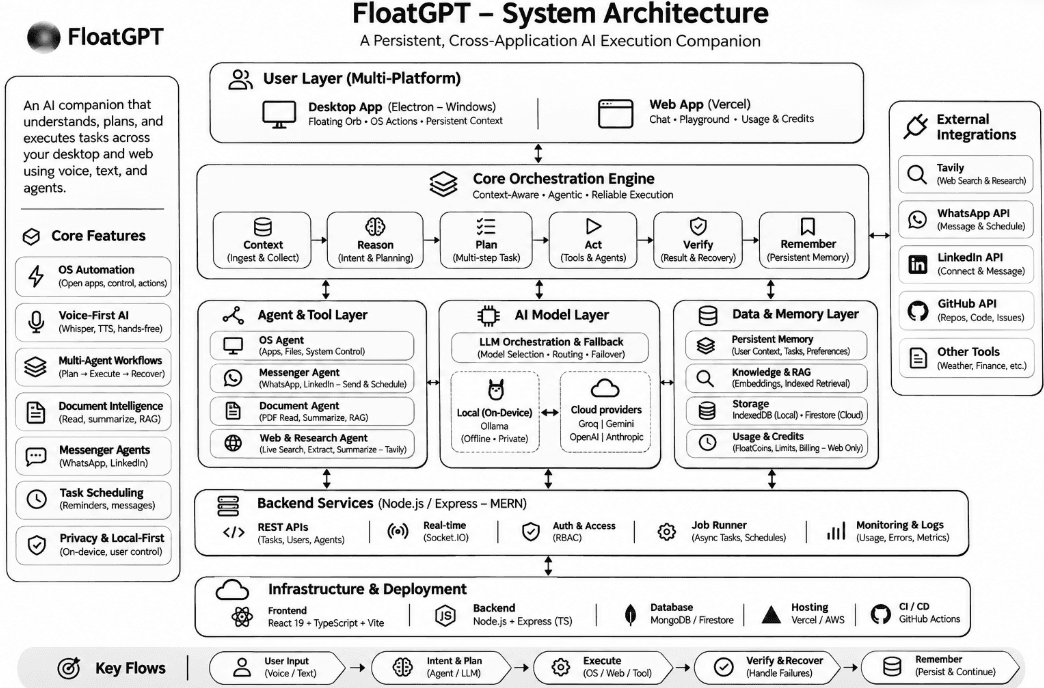
FloatGPT is an omnipresent desktop AI companion that floats over Windows to automate OS workflows, plan tasks, and generate real-time executive dossiers. Operating 100% privately on your PC or powered by the cloud, it transforms daily computing with screen awareness and calm execution.
ClaimTrace
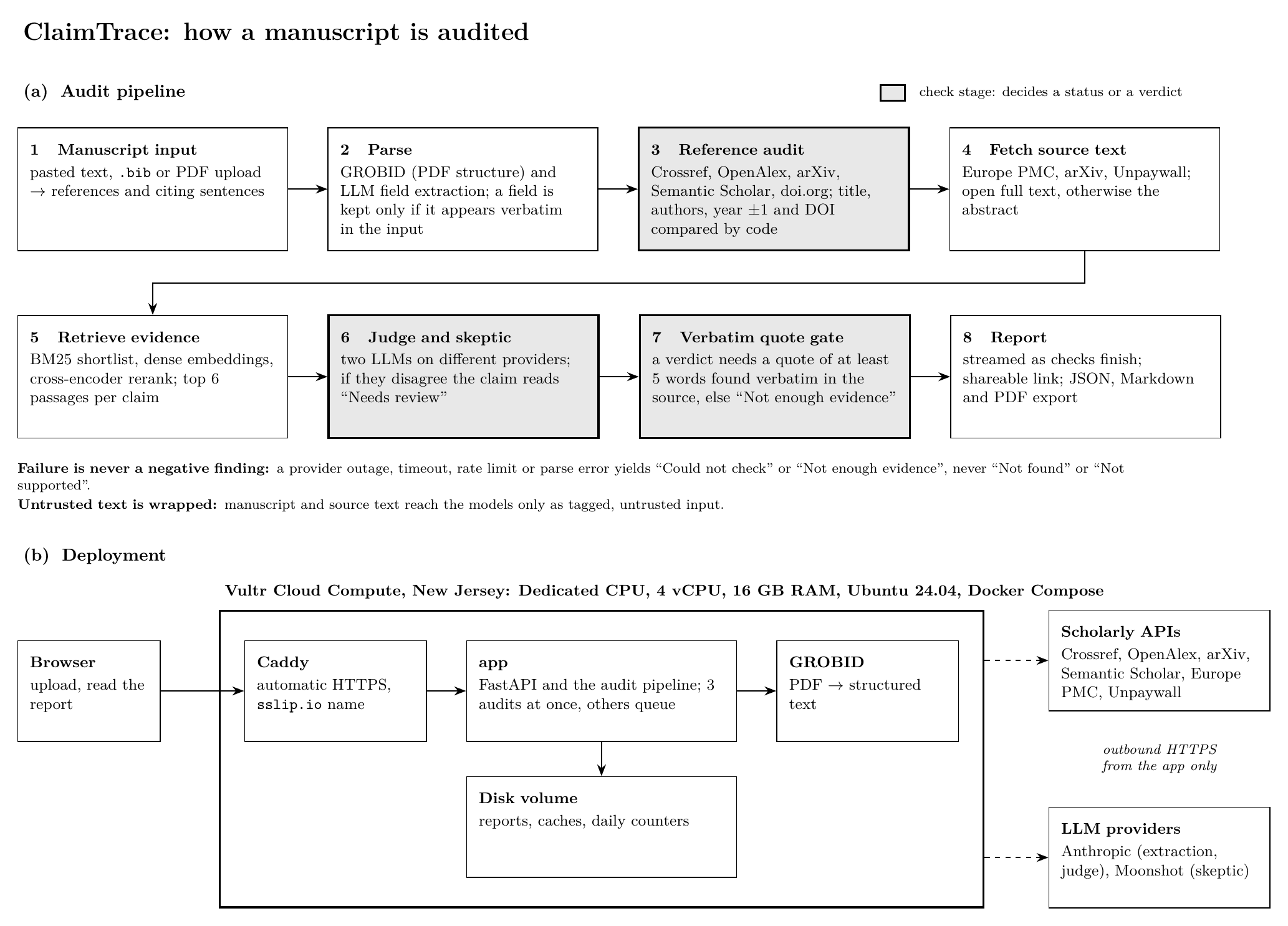
ClaimTrace audits the citations in a scientific manuscript: it checks that every reference exists and is described correctly, and that each cited source actually says what the citing sentence claims, with a verbatim quote as evidence. On 1,728 reference test cases it never marked a fabricated or altered reference as verified.
SeeHere: audio descriptions for lecture videos, grounded in visual evidence
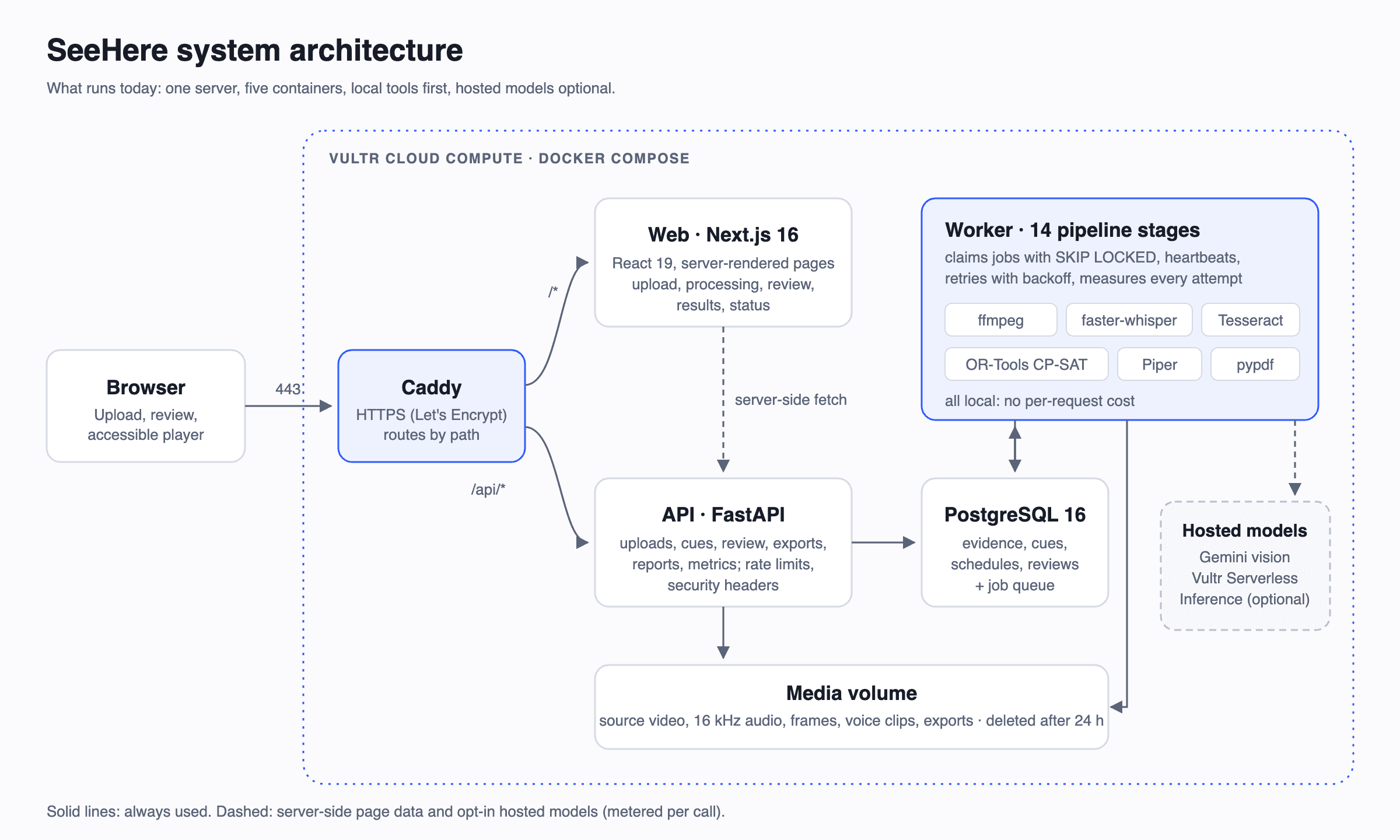
When a lecturer says “look at this chart”, blind and low-vision students hear nothing. SeeHere watches a recorded lecture, finds what is on screen but never said aloud, and writes short audio descriptions that a CP-SAT solver fits into natural pauses. Every line is linked to its evidence (keyframe, OCR, transcript) and checked, and uncertain claims are held for an instructor. Live on Vultr Cloud Compute with Vultr Serverless Inference.