



Overview
Live Demo Video Link: youtube.com/watch?v=6deDB7ZHbA0&feature=youtu.be
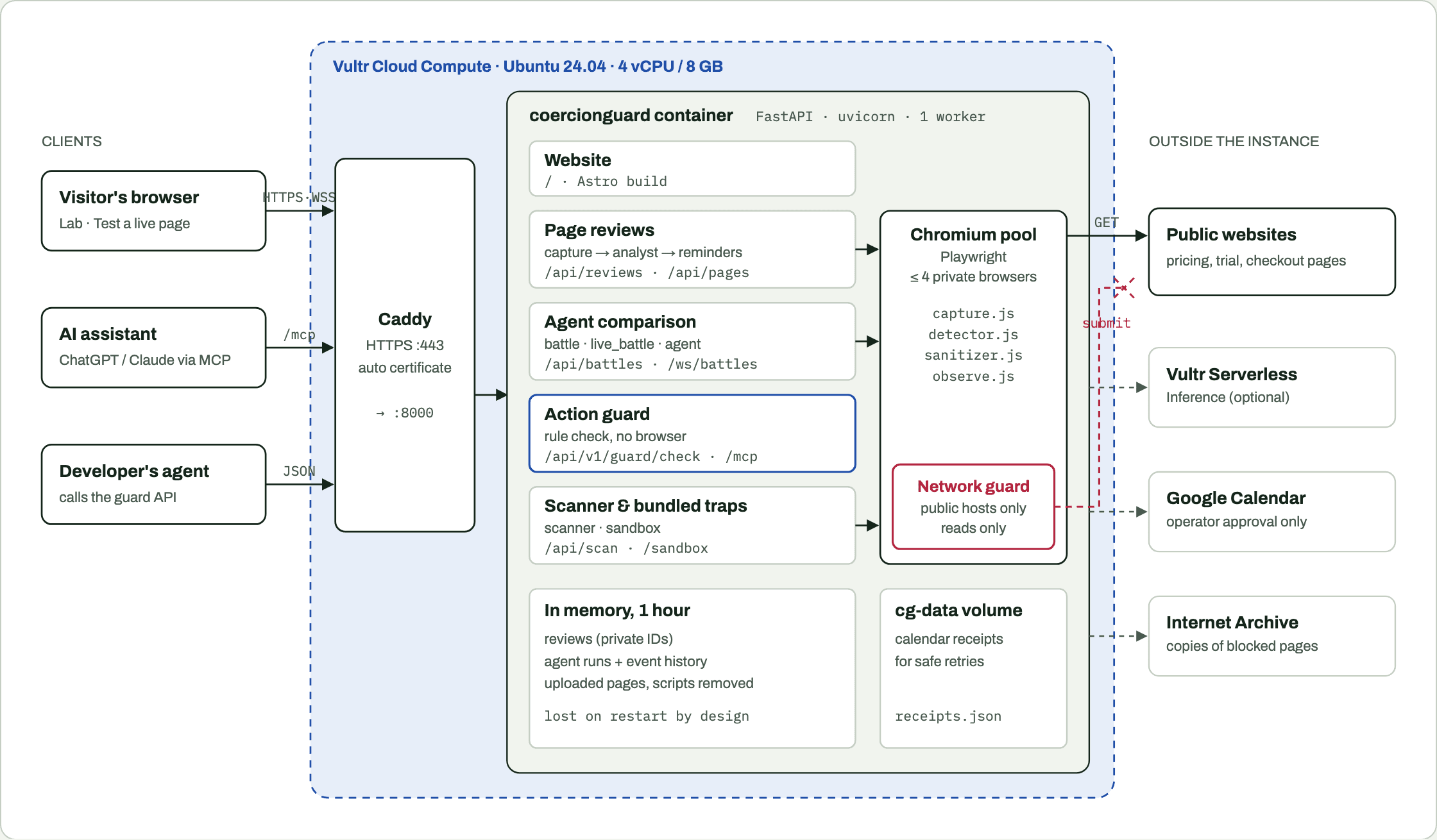
CoercionGuard protects people from being tricked by websites when an AI agent shops or signs up for them. You give it a real page (a live link or a copy you saved in your browser) and say what you want, such as “pay monthly, no annual commitment” or “no extra fees”. It reads the whole page, including fine print and text hidden in collapsed sections, and flags anything that goes beyond your instruction: auto-renewals, pre-ticked add-ons, yearly commitments, hidden fees and data sharing. Each finding is quoted from the page and mapped to consumer-protection rules in India, the EU and the US.
To show the difference it makes, CoercionGuard runs the same AI agent on the page twice. On its own, the agent falls for the page’s defaults and traps. With CoercionGuard, the page is rewritten to match your instruction: the agent switches to monthly billing, unticks add-ons and sees the hidden fees, or it’s stopped before agreeing. Every submit is blocked at the network, so nothing is ever sent to the real site. Developers can also call the same check through an API, or connect AI assistants like ChatGPT and Claude to it, so an agent checks a purchase against the user’s permission before acting. It runs on Vultr Cloud Compute.
How it uses Vultr
CoercionGuard runs entirely on a Vultr Cloud Compute server (Ubuntu 24.04, 4 vCPU / 8 GB), deployed as a single Docker container behind Caddy for HTTPS. The server hosts the website and the API, and does the heavy lifting: a pool of private Chromium browsers that open real websites, read their pages, and run two AI agents side by side to show what each one would agree to. That’s real compute load, which is why the project needs a full server rather than static hosting. The network guard runs on the same server, so every purchase or sign-up an agent attempts is stopped before it ever leaves the Vultr machine.
No comments yet
Be the first to comment on this project.
FloatGPT — Omnipresent, Local-First AI Desktop Companion
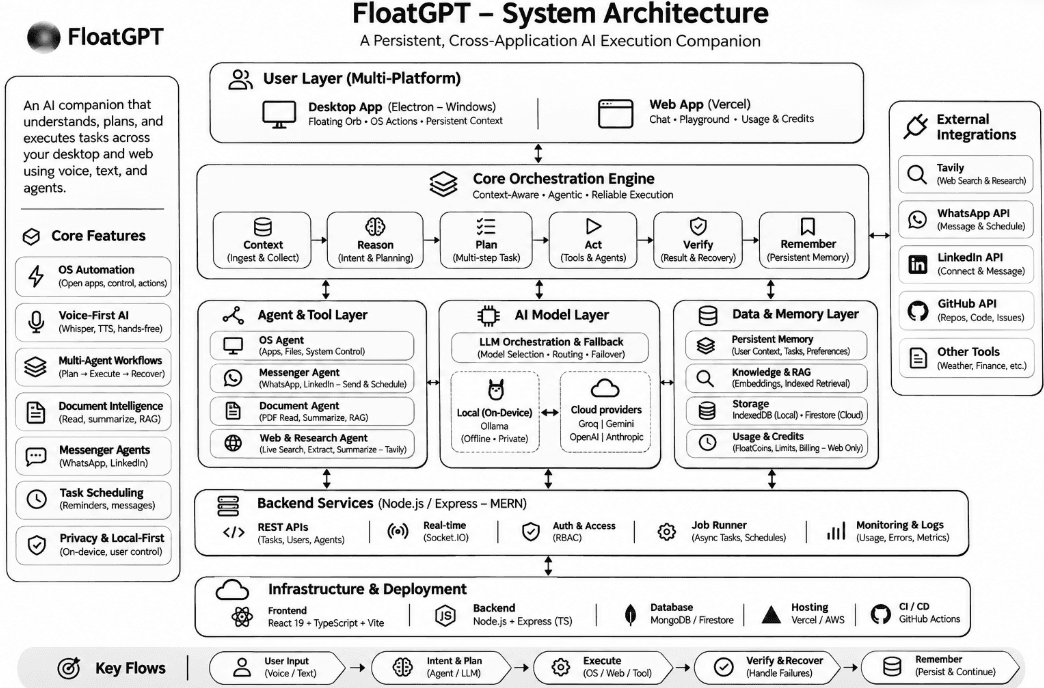
FloatGPT is an omnipresent desktop AI companion that floats over Windows to automate OS workflows, plan tasks, and generate real-time executive dossiers. Operating 100% privately on your PC or powered by the cloud, it transforms daily computing with screen awareness and calm execution.
ClaimTrace
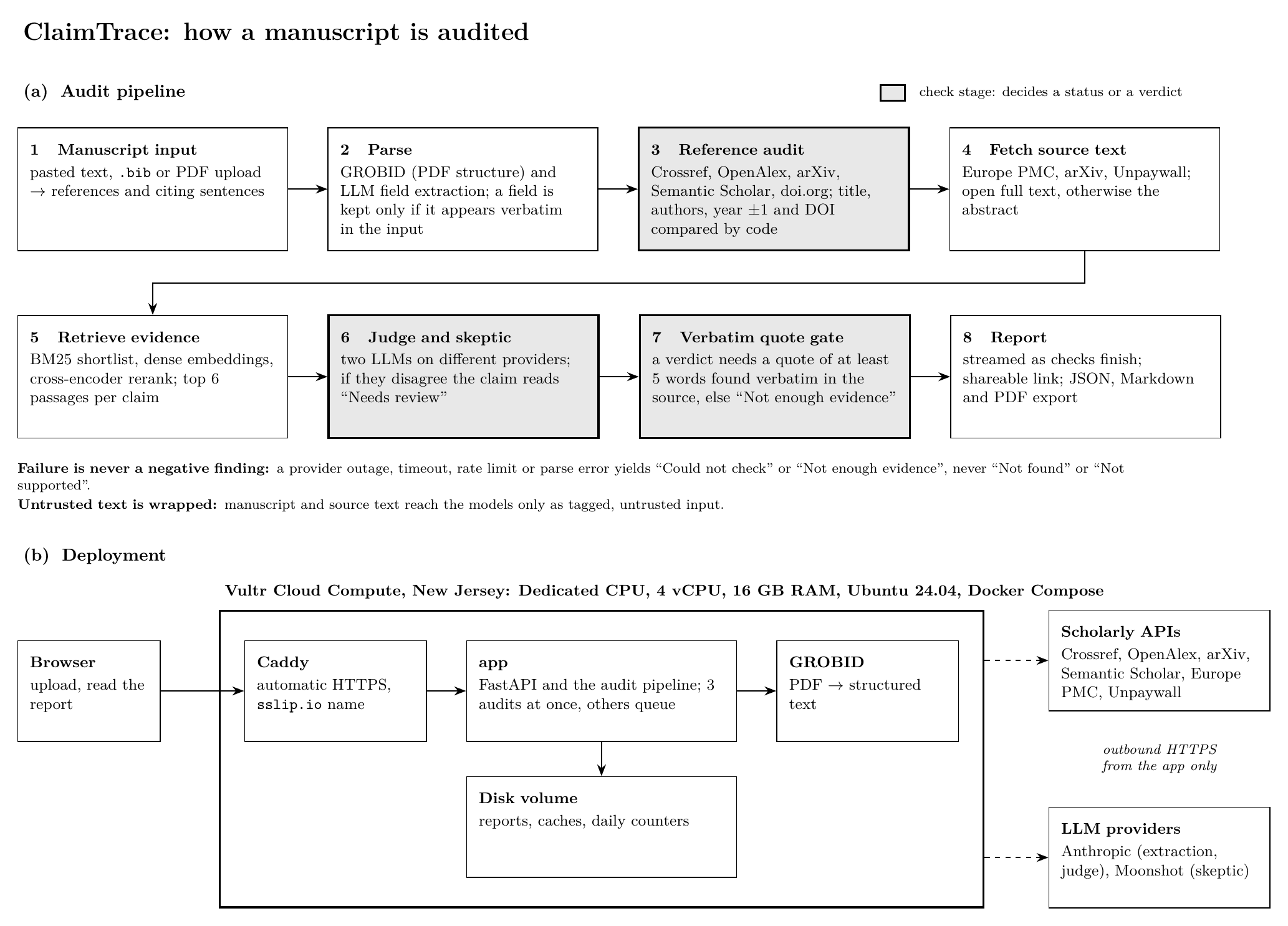
ClaimTrace audits the citations in a scientific manuscript: it checks that every reference exists and is described correctly, and that each cited source actually says what the citing sentence claims, with a verbatim quote as evidence. On 1,728 reference test cases it never marked a fabricated or altered reference as verified.
SeeHere: audio descriptions for lecture videos, grounded in visual evidence
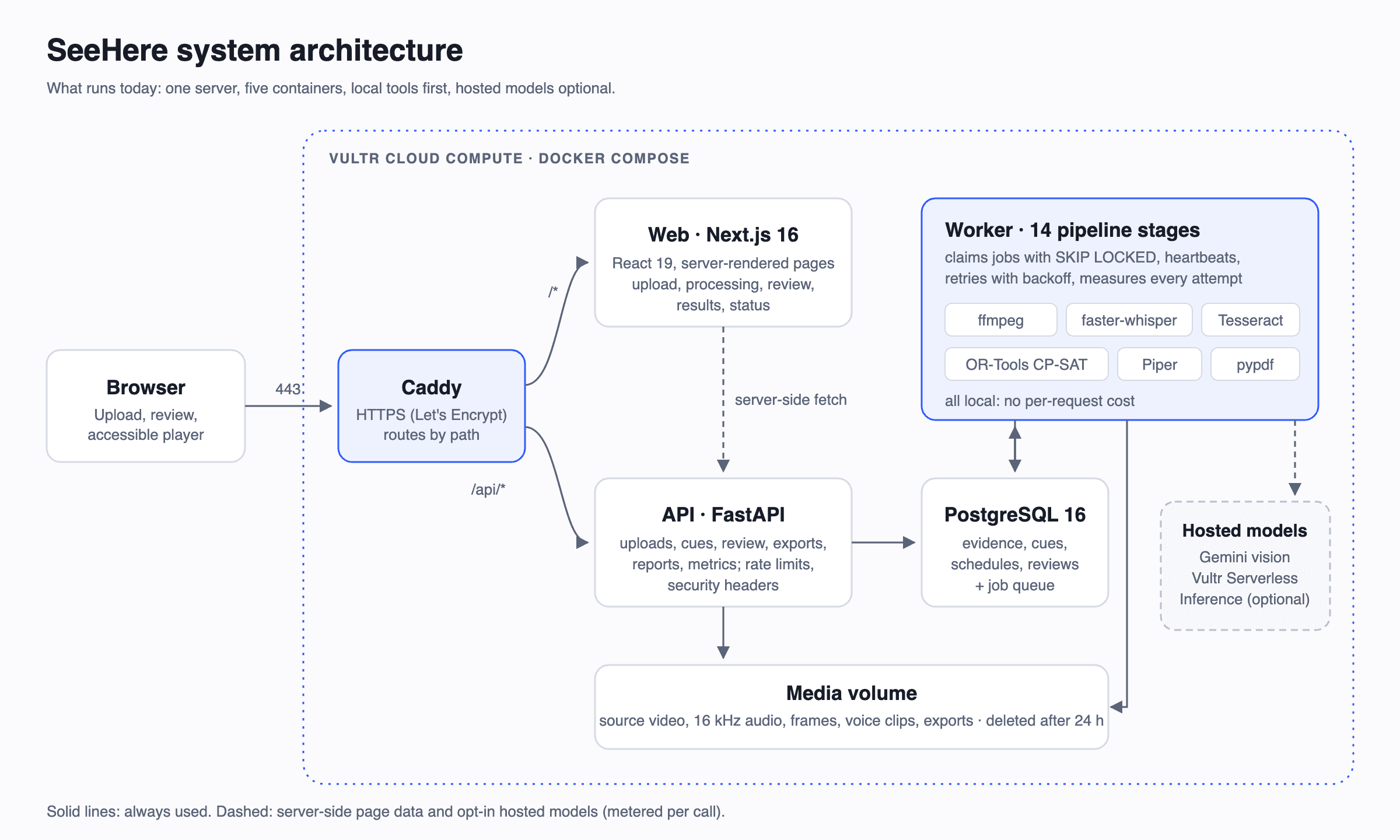
When a lecturer says “look at this chart”, blind and low-vision students hear nothing. SeeHere watches a recorded lecture, finds what is on screen but never said aloud, and writes short audio descriptions that a CP-SAT solver fits into natural pauses. Every line is linked to its evidence (keyframe, OCR, transcript) and checked, and uncertain claims are held for an instructor. Live on Vultr Cloud Compute with Vultr Serverless Inference.