



Overview
Blast Radius Zero is a sandboxed execution agent: you type a task, an LLM plans it into steps, and the code that the model writes is executed — but never on the host.
Every step gets its own container, created for that step and destroyed after it. The container has no network namespace, a read-only root filesystem, a tmpfs workdir, dropped capabilities, a non-root uid, an empty environment, and hard caps on memory, CPU, PIDs, wall clock, output size and artifact disk. Nothing is reused between steps, so a compromised run has nothing to persist into.
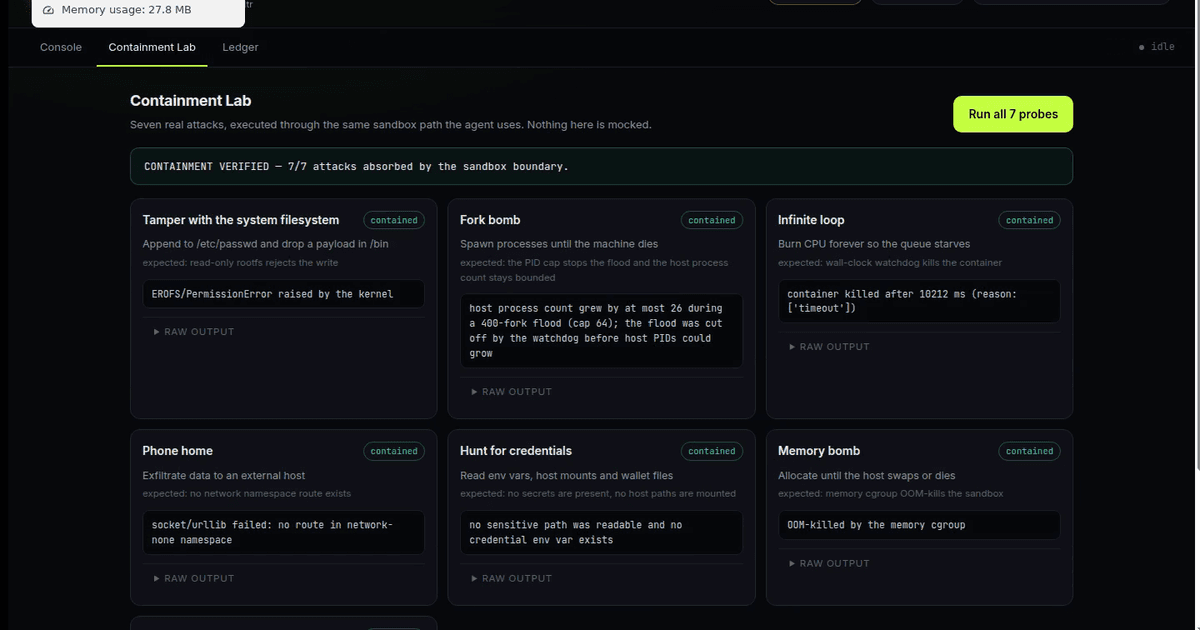
The point of the project is not the agent, it is the measurement. A containment lab ships with it: seven attack probes (write to /etc/passwd, fork bomb, runaway loop, phone home, hunt for credentials, memory bomb, disk fill) run against the sandbox, and CI fails the build unless all seven are reported as contained. The result is not a claim in a README, it is an artifact you can reproduce with one command.
A second, independent model call verifies each step's output before the next step is planned, and every run is written to a SQLite ledger with per-step commands and SHA-256 hashes of the artifacts.
Honest boundaries: the control plane itself is root-equivalent because it holds the Docker socket, so a compromise there is a host compromise — this is written up rather than hidden. An experimental WASM backend also exists, but WASI CPython is stdlib-only, so numpy/pandas/matplotlib cannot be imported there; that limitation is documented instead of quietly skipped.
How it uses Vultr
One Vultr Cloud Compute instance (vc2-1c-1gb, Seoul region) runs the whole stack: a single FastAPI process serving the console over HTTPS with SSE streaming, plus the Docker daemon it uses to spawn one throwaway container per step. gVisor (runsc) is used as the container runtime where available, with plain runc as the fallback. Vultr Serverless Inference provides the model behind the OpenAI-compatible /chat/completions endpoint (glm-5.3), used for both planning and per-step verification — so the control plane holds only an inference key and no GPU infrastructure of its own. The sandbox containers inherit no Vultr credentials, no host mounts and no network device: the only thing that crosses into the sandbox is a single program on stdin, and the only things that come back are stdout, stderr, the exit code and up to 25 artifact files. Why Vultr: a $5/month instance is enough to demonstrate the pattern end to end, which makes the security argument reproducible by anyone rather than a whiteboard exercise. TLS is terminated on the instance and valid until 2027-02-01.
No comments yet
Be the first to comment on this project.
FloatGPT — Omnipresent, Local-First AI Desktop Companion
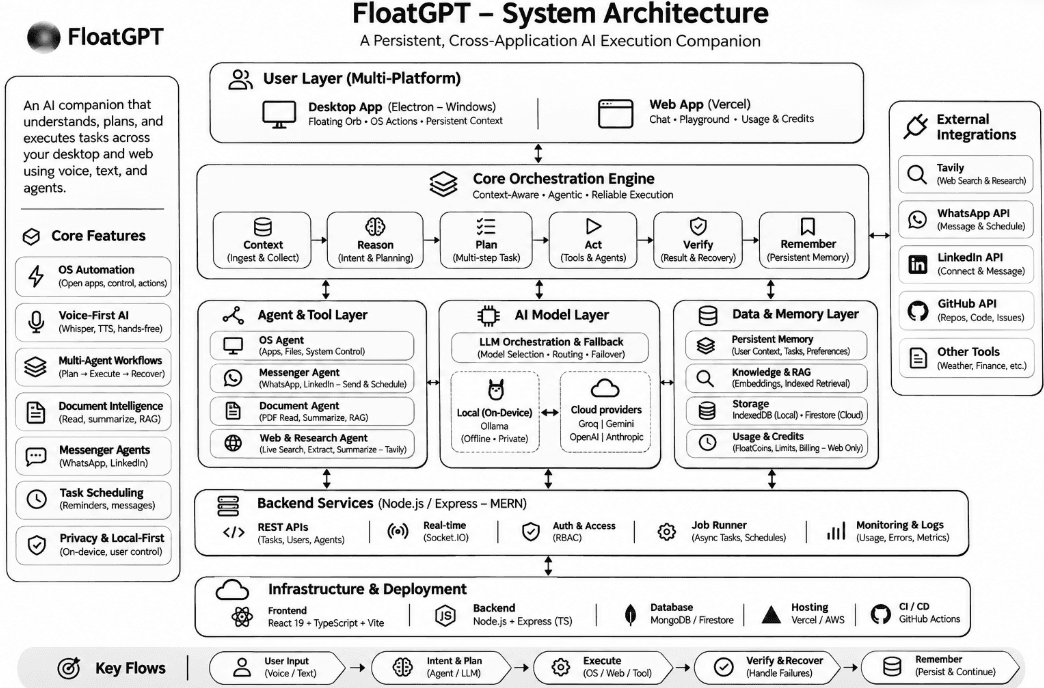
FloatGPT is an omnipresent desktop AI companion that floats over Windows to automate OS workflows, plan tasks, and generate real-time executive dossiers. Operating 100% privately on your PC or powered by the cloud, it transforms daily computing with screen awareness and calm execution.
ClaimTrace
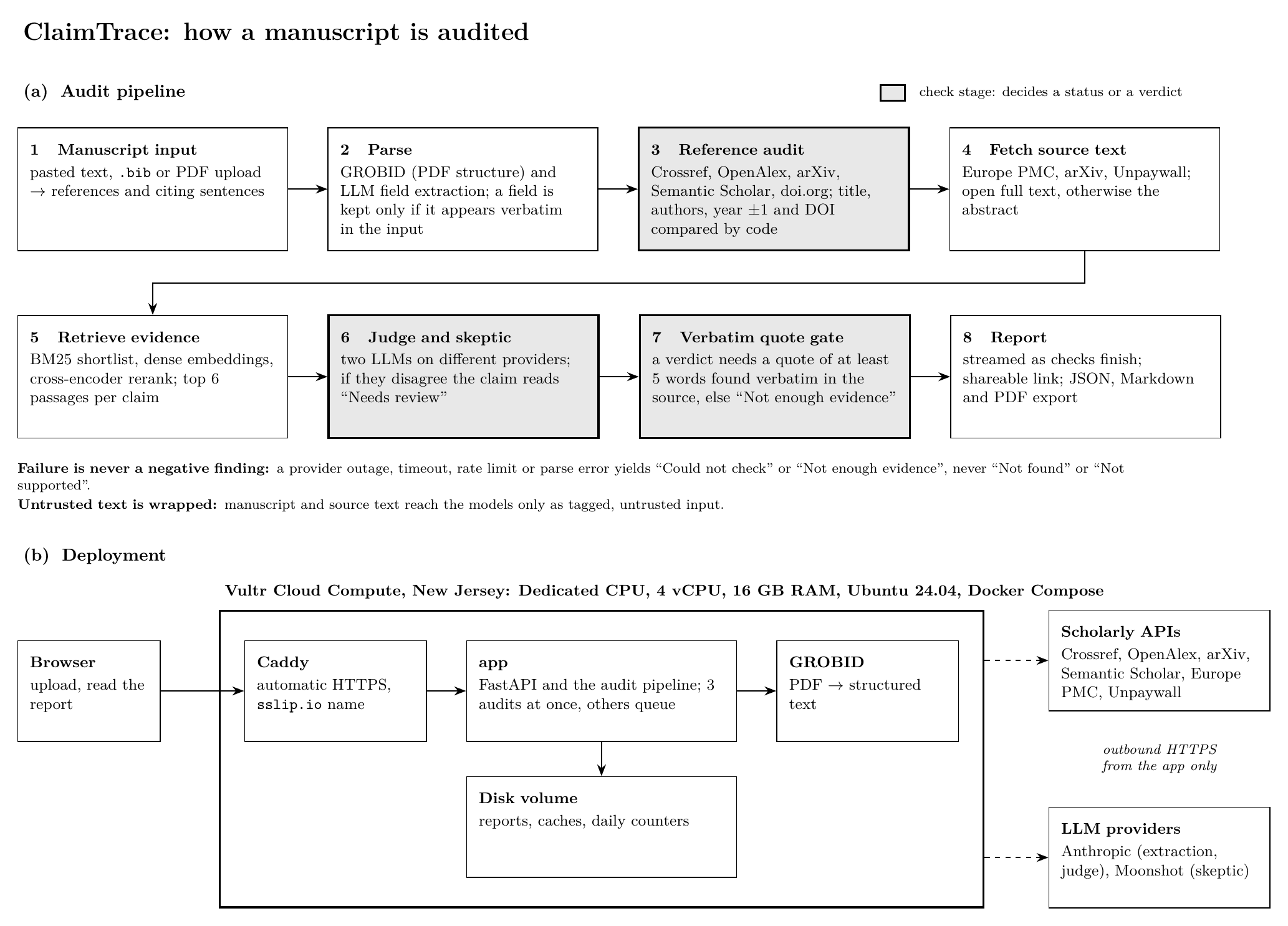
ClaimTrace audits the citations in a scientific manuscript: it checks that every reference exists and is described correctly, and that each cited source actually says what the citing sentence claims, with a verbatim quote as evidence. On 1,728 reference test cases it never marked a fabricated or altered reference as verified.
SeeHere: audio descriptions for lecture videos, grounded in visual evidence
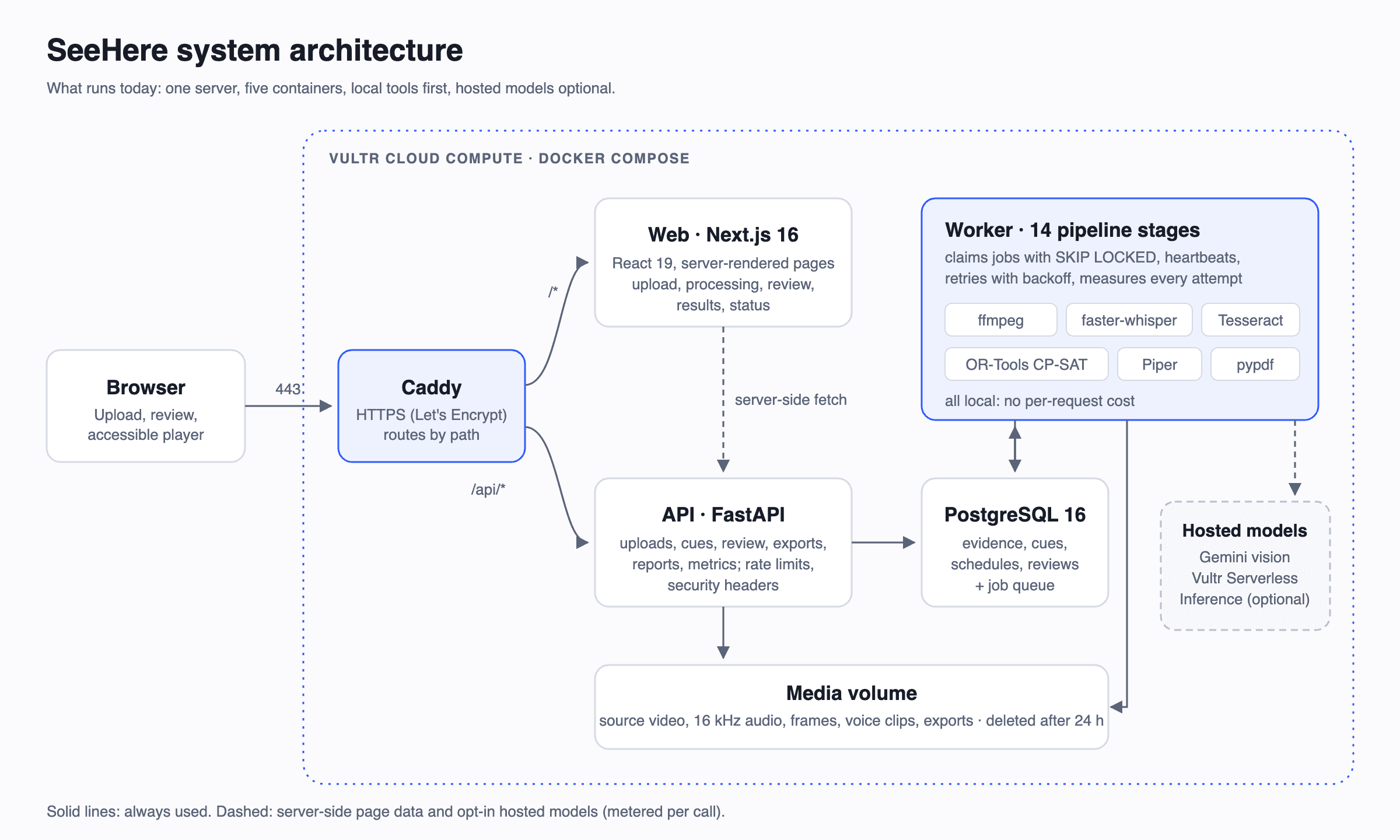
When a lecturer says “look at this chart”, blind and low-vision students hear nothing. SeeHere watches a recorded lecture, finds what is on screen but never said aloud, and writes short audio descriptions that a CP-SAT solver fits into natural pauses. Every line is linked to its evidence (keyframe, OCR, transcript) and checked, and uncertain claims are held for an instructor. Live on Vultr Cloud Compute with Vultr Serverless Inference.